Counting the Omer

Courage- A Boundary in the Expanse
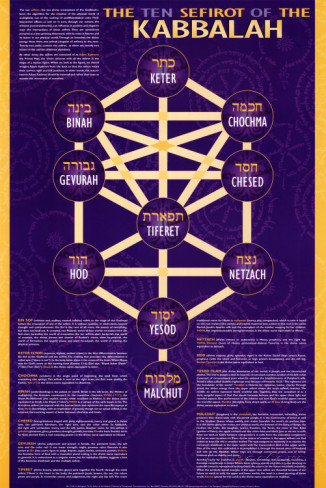
the-ten-sefirot-of-the-kabbalah

HaRav Israel Asulin

Translated by Moshe Neveloff

Monday, 24th of Nisan 5776

The week of Chessed[1] has passed, which builds inside of us a world of love and giving, and behold we move to the second trait of the seven traits, courage.

Courage and kindness- two opposites.  Kindness comes from the right side and courage from the left.  Kindness is expansion and courage is constriction.

So why do they always come one after the other?  How do we make this quick switch in a moment?

It’s exactly because of this that these two traits always come one after the other, because they need each other; it’s impossible to obtain courage without kindness, and it’s impossible to have kindness without courage.

What is courage?

Firstly we will try to understand what courage is.

The Mishnah in the Ethics of our Fathers asks: “Who is courageous?”  Who is fitting for the title of ‘courageous’?  He who’s blessed with great and tremendous physical strength which give him the power to conquer countries and subdue world powers?  Or perhaps courage is the image of the geniuses of the world and the richest people, everyone is subject to their authority from the strength of their brilliance or financial influence…?

No, the Mishnah answers, he is not the courageous one.  The courageous person is specifically and only “he who overcomes his evil inclination”!  A person who has the ability to rule over his desires, his impulses and his feelings, and to guide them properly.  His heart is in his hands and he has the ability to abstain from the most desirable things.  He who knows the words “no” and “enough” (when they are of course speaking to himself) and he lives with them in peace and love.

Because the attribute of courage is the power of limitation; our ability to make for ourselves boundaries and stand by them.

And why, actually, do we need this limitation?  Why shouldn’t everything be permitted, full of kindness, abundance and love?

Because if there is not courage, there won’t be room for kindness.  Courage is that which builds the vessel for blessing and kindness.  Without courage, the kindness is like water in a broken vessel, leaking from all its sides and losing itself.

Where am I courageous?

After we’ve understood what courage is, we can look at this attribute inside of us.

What type of person am I in my nature?  To which side do I lean towards- the attribute of kindness or the attribute of courage?

Do I have in my life boundaries and clear principles that I consistently stand by?  Which?  In what area, and how do I live with them?

Do I have areas of my life where I’m lacking boundaries?  How am I with boundaries?

Firstly, how I am with the holy Torah?  We have commandments which were given to us by the Creator, there are boundaries and prohibitions, and there are no compromises!  I want to stay in these boundaries and not deviate from them in any direction, God forbid.

Boundary, Boundary… but in proportion!

Okay, we understood the definition of the attribute of courage and we also identified it in our lives.  Now we’ve reached the main stage of the work- clarifying the attribute.

Because like all of the character traits, the trait of courage also needs to appear in our lives with the correct proportion!

We all know that there’s a need for boundaries.  Each one of us who begins to work on personal growth comes to recognize the importance of boundaries and he even identifies what he needs to do in the matter- to begin a diet or to stop smoking or to succeed at work or erase his minus in the bank; and nevertheless, for most of us in this generation the subject of boundaries is one of the most charged subjects and one of the subjects which causes the most opposition.  I just hear the word boundaries and my ears become closed.  No thank you, that’s not what I wanted to hear now!

Even if I didn’t succeed in keeping my boundaries for a few days, it’s going to take revenge on me big time!  Because truly, I don’t want, and any ‘no’ or ‘enough’ or ‘forbidden’ like this chokes me and finishes me!

Why does this happen to us?  Is there something to do against this, and how is all this connected to limiting the boundary?

The reason is internal expansion.

In the holy Zohar the character traits of love and fear are called ‘two wings’.  Just as it’s impossible for a bird to fly with only one wing, so to it’s impossible for us to conduct ourselves only with love or only with fear.  We need both of them, also kindness and also courage.

Kindness is expansion, it is abundance, and on the other hand courage is the boundary and the constriction.  If a person has an open expanse inside, a life full of internal abundance, love- that he knows to love himself together with Hashem and from there his loved ones and all of the Jewish people; if he knows what it is to pray to Hashem, to scream to Hashem, to cry and plead; if he knows to want and be anything, even a clucking chicken in his free time… if he knows how to dance; if he’s alive, then when he’s told that something is forbidden, he has no problem with the prohibition.  On the contrary, he’s happy that he has a boundary.  Do you understand?  “From so much expansion I almost got lost!  So thank you for the boundary!  It gives me protection.  Now I feel trust and belonging!  Thank you!”

However, if we come to a Jew who’s never received  the space to fly and he doesn’t have any internal expansion; he doesn’t know what love is; he’s never tasted the taste of tears; he doesn’t know all the different octaves of his voice; he’s never made sounds like a chicken, and never danced, and never burst out in laughter.  He has no idea what a true conversation is between friends where they speak with the awe of Heaven and help each other’s good points shine… if we’d come to him and say ‘forbidden’, his whole being would scream with anger, “what do you mean forbidden?!  Give me something, allow me to have some expansion!  If you take this from me also, you’re killing me!  I can’t!  I have nothing!  I have to have some pleasantness!”

This is the secret of the boundary and the expanse.

What if I discover that it’s true, I don’t have any internal expansion; what do I do now?

Firstly, I need to know that it’s not that I don’t have any internal expansion; I do have, but it is hidden from me.

How can I reveal this alive place inside of me, which is so pleasant, even and specifically with prohibitions and boundaries?

In order to find the opening to true expansion, you need to begin specifically with the clear boundaries.  Every one of us has a tremendous yearning for expansion.  However, if you are lacking boundaries, then you’ll come to a lowly level of kindness, bad types of love.  Of course, this is not the expanse that we are searching for.

Therefore, begin with boundaries.  Even with one small boundary.  Limit yourself in something, gently, understanding your difficulty to stay within boundaries.  Say to yourself, it’s true, you’re right!  The only type of love you know is from addiction, and it’s so difficult to say no and to remain so alone without any love.  But wait, soon Hashem will already show you a different kind of love, real and true.  Love which is a great expanse to live within, and it will sprout specifically in the merit of this boundary which you are trying to stand by with great sacrifice!

On the other hand, don’t be there by yourself.  Search for someone who knows these expanses inside of him, and believe in the expanses which are hidden inside of you; he’ll be for you a friend or mentor and he’ll shine inside of you your expanses.

Thus, with correct boundaries in the right proportion, you will stride in this incredible path, and see how specifically from the boundary internal expansion of light and abundance opens inside of you.  Amen.


[1] Kindness, each week of the Counting of the Omer has a special character trait associated with it

Let Go and Know that I am Hashem

If we will take to heart this possibility and be open to it, we can expect to see, again and again, in an endless amount of situations how things happen without our direct involvement.

We just let go, released our hands from too much control, and stopped our involvement, and all the rest Hashem did for our best.

shmitta

Rav Yisrael Asulin

Translated by Moshe Neveloff

Monday, 8th of Iyar, 5776

BS”D

Amongst the 613 mitzvahs, which obligate each person to control his actions, to try to go in the right direction, and to choose correctly in every moment; there is one mitzvah, which seemingly says the complete opposite- to sit and not to act is preferable.  Sit quietly, take a rest.  Don’t be in control.  Be in the sabbatical year, a year complete rest.

“Hashem spoke to Moshe on Mount Sinai, saying: Speak to the Children of Israel and say to them: When you come into the land that I give you, the land shall observe a Sabbath rest for Hashem.  For six years you may sow your field and for six years you may prune your vineyard; and you may gather in its crop.  But the seventh year shall be a complete rest for the land, a Sabbath for Hashem; you field you shall not sow and your vineyard you shall not prune.  The after growth of your harvest you shall not reap and the grapes you had set aside for yourself you shall not pick; it shall be a year of rest for the land.”  (Leviticus, 25:1-5)

In the framework of the mitzvah of shmitah[1] each Jew who lives in the Land of Israel is commanded during the seventh year to stop any type of work in the field for a complete year and to abandon its produce.

Yes, it’s true, you are commanded to work for your living to support your family.  It’s true that you turn your eyes to this produce and for six years in a row you work hard for it.  And it’s true that naturally, without your efforts there would be destruction and loss and desolation.  It’s true, but nevertheless you need to sit.  Take a rest, breathe, observe the year of shmitah.  Rest from your effort, your action, and your control.  A sabbatical year for the land, a sabbatical for Hashem.

For the land owners amongst us a year like this has great significance and it requires submission and sacrifice and devotion.  However, to many other people the sabbatical year doesn’t affect us so much.  We of course guard the holiness of the fruits of the seventh year, buy only produce grown by non-Jews or what is sold by the rabbinical court, each one according to his custom, but we don’t stop ploughing and pruning, and we also don’t have to abandon our fields.

So what does this mean?  Is this mitzvah limited only to the small amount of farmers amongst us?  Did the sweeping movement of urbanization wipe out away for most Jews an entire mitzvah from the Torah?

Beyond the practical meaning of the seventh year, there is an internal process which happens in parallel, a process which happens to each Jew, even if he is a city dweller who’s never seen a real plough in his life…

Like every mitzvah and matter in the Torah, the mitzvah of shmitah is connected to each part of a person- thought, speech and action; his lower soul, his spirit, and his higher soul.  Therefore there is also the mitzvah of shmitah in our soul, a mitzvah which applies to all of us.

What is the idea of a sabbatical in our soul?

Shmitah in the soul is letting go.

The sabbatical year, like its name that is its essence, it teaches a person to release and to stop working.  To let go.  Not to be in control.  This year reminds someone that “the land is Mine” (Leviticus, 25:23) – the land belongs to Hashem and man is responsible for the land, but he doesn’t have the permission to do to the land whatever he wants.  In the sabbatical year man is ‘exiled’ from his land for a full year, he separates himself from his daily matters for matters which he usually does not have free time to involve himself with, he takes a step back and contemplates.

And like in the field, so too in our soul, we are requested to release all those things which might prevent our connection to our roots, to forego the habits which seem like we can’t live without, and to distance ourselves from anything that might blur our true purpose and to loosen our grip, to be in a state of zero strength.

What is letting go?

It is a blessed movement in our soul which comes from humility and faith and brings us to trust in Hashem and calmness.

Releasing begins when a person understands that he is not the one who controls reality, he believes that there is a greater power who guides everything, also him, and he recognizes that everything he has in his life, on the inside and the outside, doesn’t belong to him, but rather to the Creator, and everything is just a deposit in his hands.  If the Torah teaches me to release something that is very precious to me, to the point that I think that I won’t be able to live without it, it comes from Divine providence, and it is because the Torah wants to give me something much better than this.

When a person accepts this he’ll succeed in releasing his hysterical, automatic hold on reality.  He’ll let go of effort, even when we’re speaking of an effort which the Torah itself requested of him previously; to move between different situations according to the commands;  to be released from old and set patterns and to surrender oneself to external dictates, even if they are not understood and familiar and to lift one’s eyes to Heaven, instead of to the earth…

This letting go makes space for Hashem to enter inside of him, and gives him trust and Godly calmness, because that is the process: “Desist and know that I am Hashem.” (Psalms, 46:11)

When I let go of my hold of exact plans and difficult work, I create space for Hashem.

When I understand that the story is not mine, that my perspective and control are limited and narrow, I allow a place for Hashem to do His part and I open the window for Heavenly assistance and surprising occurrences, even miracles.

When I forego my strong control on everything which moves in my life, I stop being stubborn in my opinions and plans and the goals I set for myself, and I nullify myself before God’s will: “Because it’s forbidden for a person to hold strongly onto anything, that is to say it’s forbidden to be stubborn… since Hashem will do for him specifically what he requests, because it’s like a person who takes something by force, by stealing; a person just needs to pray and plead before Hashem with mercy and supplication; if Hashem gives he gives, and if not then not.” (Likutei Moharan, Torah 196)

It’s possible to see this clearly and tangibly in the story of the sophisticate and the simpleton.  The simpleton, whose entire essence is internal calmness and release, receives a letter from the king which says that the king wants to see him.  The simpleton is not scared or shaken up by the sudden call, he just clarifies that this is not a joke, and he joins the messenger.  With complete relaxation, with incredible completeness.  He doesn’t even wonder how he’ll reach the king, he also doesn’t bother to find a replacement for himself and his shoe store, in order not to lose his business in his absence.  He doesn’t hold on to anything; the king is calling him, so he leaves everything and comes.  And this was the opening for the biggest change of his life.  Because if you don’t hold on tight, Hashem enters the picture and brings you to the city of the king… therefore there really is no more need for the shoe store…

And this is not just a story, because if we will take to heart this possibility and be open to it, we can expect to see, again and again, in an endless amount of situations how things happen without our direct involvement.

We just let go, released our hands from too much control, and stopped our involvement, and all the rest Hashem did for our best.

[1] Sabbatical year

Parashat Emor

Who’s Counting You?

What do you know about the place from where you arrived compared to their place?!  What do you know about your mission and the incredible rectifications which are made from your every action and little bit of will?!  Only look at yourself! 

omer counting

Rav Yisrael Asulin

Translated by Moshe Neveloff

Monday, 1st of Iyar, 5776

BS”D

Forty Nine days, forty nine blessings with God’s name and kingship, forty nine preparations.  The Counting of the Omer[1].

“You shall count for yourselves- from the morrow of the rest day, from the day when you bring the Omer of the waving- seven weeks, they shall be complete.  Until the morrow of the seventh week you shall count, fifty days.” (Leviticus, 23:15-16)

Everyone knows that these verses are referring to the forty nine levels of coming closer and becoming holier leading up to the receiving of the Torah.  However, Rebbe Natan explains that the words “you shall count for yourselves” are the basic principle which all of the service rests upon: “’you shall count for yourselves’- to yourselves.  Specifically to yourselves, that means that each person needs to count the Counting of the Omer, which is the aspect of strengthening himself, according to who he is, and he shouldn’t become discouraged by the fact that it seems to him that his peers are much better than him… because no person is similar to his friend at all.” (Likutei Halchot, laws of Passover, 9:22)

When we want to make progress in something, to fulfill a spiritual service, to strengthen our fulfillment of a mitzvah, to be better, to come closer to Hashem, to pray with more heart, to be more patient and pleasant and attentive and accepting and calm and friendly to each person… In any thing we want to strengthen and in anything that we accept upon ourselves, we are aware of the fact that we might run into external difficulties; at home or outside the home, with friends or family or the boss or the neighbors or a passerby who is especially careful, someone is going to try to prevent us from our (spiritual) work.  Someone will jeer at you in a harsh way: “Why are you trying to pretend like you’re a tsaddik?  Who are you trying to fool with this pose?!  We already know you!”  Or, “Do you really think that the chocolate you eat or don’t eat is connected to your spiritual growth?!  Come on, be easygoing!”  Or, “What’s with you and Uman??  You’re wasting so much money in order to visit some Tsaddik who passed away 200 years ago?  Have some sense!!!  Go to Prague!”  There are many other piercing and empty sayings like these…

In the face of all of these types of resistance and obstacles, we try, and in many cases succeed in being brave like tigers not to be embarrassed by people who mock our service of Hashem.

However, the more difficult and hidden battle is in a complete different area.  This battle is not conducted against ‘evil people’ who slander us, they conduct an open frontal battle against us.  Rather this battle happens inside of us, and in this battle we are also against ourselves, looking at the image of other ‘tsaddikim’ and wondering why it’s not us…

In this battle the evil inclination presents to us with great generosity a magnifying glass focused on all of our friends, those who began like us at the same starting point… and look at where he is today!  He’s made so much progress!  He’s so successful!  And look at him, he lost thirty kilos in six months!!  How am I stuck on the same numbers for thirty years?!  That guy who does personal prayer every day- he’s really doing it!  He doesn’t fall asleep like me after five minutes… and my wife and her brother and my Rabbi and that guy from the shul and all the Jewish people… they are all much better than me!

So how is it that I can also make progress?  How can I too do personal prayer today where I’m just sleeping?  Isn’t it preferable to do something else with the time and that’s it?  My personal prayer is not worth anything anyways!  Look, look at my friend and understand what true prayer is!

Do you understand?  There are people who are capable, it’s successful for them, those who with every day of the counting of the Omer they reach a new level, they leave another level of impurity and enter a level of holiness, and every teaching they hear enters straight into their heart and causes wonders.  Everything they receive upon themselves is carried out in the most complete way with every detail accounted for… and just from seeing them I feel weakness.  I try, I try to make progress, I’m fighting for this, but then I receive another amazing proof from a friend who is better than me, and all that I want is bury myself under the blanket…

This is not any easy thing to cope with at all.  Especially because we are not aware of it.  We know that we need to be brave like tigers against evil people, but what do we do in the face of Tsaddikim?

This is what Rebbe Natan is telling us: “’you shall count for yourselves’- to yourselves.  Specifically to yourselves, that means that each person needs to count the Counting of the Omer, which is the aspect of strengthening himself, according to who he is, and he shouldn’t become discouraged by the fact that it seems to him that his peers are much better than him.”

We have here a command to every Jew who wants to be holier, and this command says- only look at yourself!

You’re counting, you want to make progress, to ascend, to enter the forty nine levels of holiness?  So listen well!!  Only look at yourself!  Only count yourself!  Only count for yourself!  Don’t look at the counting of your friends.  Don’t check where others are holding and what they are reaching.  What do you even know about the place from where you arrived compared to their place?!  What do you know about your mission and the incredible rectifications which are made from your every action and little bit of will?!

Continue doing without looking at what it (seems) that others have merited.  Be yourself, with your service, with your personal path to holiness.  Without comparisons!!!  Do you understand?  Even friends and loved ones can be your obstacles, if you try to compare yourself to them.  Don’t count anyone!  Here, in this place, in this area, think that you are alone in the world; there are no friends and no one is successful and complete; there is only you and your service of Hashem.

In the continuation of his teaching Rebbe Natan refers to the simpleton, from the story of the sophisticate and the simpleton (the 9th of Rebbe Nachman’s Stories): “The simpleton was a leather worker, and he couldn’t do the work as needed and his shoe had three ends, but he was very proud and he said ‘how nice and beautiful is this shoe’… and his wife would ask him: ‘if so, why are the rest of the shoe makers taking three coins for a pair of shoes and you only take one and half?’  He answered her: ‘what does that have to do with me?  That’s his business and this is my business, and furthermore, why should we speak about others?!’

Rebbe Nachman gave a hint after he told this story that his intention was regarding prayer and the service of Hashem… that we should behave with a great amount of simplicity like the ways of the simpleton mentioned above… and to be happy always and not let the world confuse us.  And even if his friends merit a lot more prayer and service of Hashem than him, nevertheless he should not fall in his mind because of this, rather he should be always happy with each and every good point that he finds in his prayer and service, whatever it might be.”

[1] Counting the forty nine days between Pesach and Shavuot

Happy and Kosher Pesach!

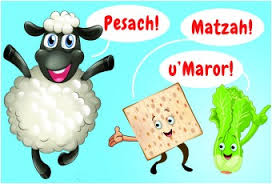
Pesach, Matzah and Maror

pesach

Rav Yisrael Asulin

Translated by Moshe Neveloff

Tuesday, 11th of Nisan, 5776

BS”D

The night of the Passover Seder is coming closer, this great night which we work hard for more than any other time of the year.  Soon we will all sit around the seder table and say these important words from the Passover Hagaddah: “Whoever has not explained the following three things on Passover has not fulfilled his duty, namely: Pesach- the Passover Offering; Matzah- the Unleavened Bread; Maror- the Bitter Herbs.”

What is special about these three words?  What is their meaning?

These three words express, first and foremost, what happened to the Jewish people, long ago, when they left Egypt.  The Jews took the Passover offering, “With matzot and bitter herbs shall they eat it,” (Numbers, 9:11) and this was their preparation for the great redemption.  They did what they were commanded to do, here below, and Hashem, from above, took them out of Egypt with signs and wonders.

However, in these words there is also a very deep teaching, which says: “My precious Jew, you want to leave Egypt?  You want to be redeemed?  Then what you need is Pesach, Matzah and Maror!”

What does this mean?

Just as in Egypt, also today, Pesach, Matzah and Maror symbolize your path to redemption.

Maror- A Burning Desire for Change

Why do we eat bitter herbs on the Seder night?

They are in memory of the bitterness we experienced in Egypt.  It was bitter for us!  Very, very bitter!!  Because of this strong bitterness we screamed to Hashem, we asked to be redeemed, we wanted with all our strength to leave Egypt, and this Maror is the beginning of our redemption.

What does this mean?

There is the situation of a slave, who thinks that being a slave is actually something good.  They bring him food and give him a place to sleep, provide him with a schedule (even if it’s not nice; however it’s organized and orderly…), they give him in the menu watermelons and garlic… and he is completely trapped in the illusion of ‘I loved my master’…

A slave like this has no chance of leaving Egypt!

In order to leave Egypt you need to feel that it is bitter!  To hate the slavery.  To feel the pain, the enslavement.  Because only if you think that being a slave is really terrible, you will leave that situation in the end.  There will come a moment when you won’t care about anything else, and you’ll find the path to escape from there and be redeemed.

This is true also inside of our soul in every area.

For example, working on marriage.  As long as you have the outlook which says that it’s good to be alone and why do you even need an obligatory relationship like this which requires you to give and consider and listen and be there for the other all the time, which causes you to lose your privacy… it’s better to be alone!  But then you won’t have the true and necessary drive to leave yourself and truly connect to your spouse.

When do you receive the internal will to leave yourself and completely dedicate yourself to your marriage?

Only when you taste with your whole mouth the bitterness of the loneliness and feel completely what is written in the Torah ‘It’s not good that man be alone’ (Genesis, 2:18), only then and only from there, the door to your redemption is opened.

Pesach- To Slaughter the Idol Worship

What is the idea of the Passover offering?

Before the exodus from Egypt Hashem commanded the Jewish people to take a lamb, an idol of Egypt, and slaughter it.  Not in hiding, not in a way that no one would see, rather completely in the open, so that each and every Egyptian would see how we took the symbol which they were enslaved to and we turned it into roasted lamb.

What was the reason for this?

The Jewish people needed to be freed from the idol worship of Egypt, and in order to be completely freed, without leaving any footsteps or any scars, they needed to break the Egyptian idol and slaughter it.

This is true also in the depths of the soul.

Every one of us has some type of idol worship in his head, some type of substitute will allows him to escape from the real thing.  Surely it is not in his conscience, but he is completely enslaved to it.  Some of us serve the idol of money, others the idol of honor, or beauty, or excellence or career or appearance…

What is the problem with the fact that I want a little money or that it’s important for me to succeed at work?  As long as the main thing for me is the service of Hashem which I’m obligated by, and all the other things are just background, it’s okay.  The problem with idol worship is that it turns the less important into the main thing.  The moment that this happens- you disconnect from life, from your path to redemption!

If, for example, it’s very important for me to succeed at work, how much time and availability and energy will be left for me to dedicate to my marriage?  And if I serve the idol of ‘everything is perfect and there’s no problem’, how can I listen to my wife when it’s hard for her and everything is not exactly perfect for her?

Because in order to reach true freedom, to leave Egypt and split the sea, you need to know to ignore your ways of idol worship and focus on what’s important.

If I have Pesach and Maror in my soul, then I’m ready for one more important part of the great exodus, and that is the Matzah.

Matzah- Complete Trust

What is Matzah?

The Holy Zohar explains that Matzah is the bread of faith and also the bread of healing!

What does this mean?

Faith is not connecting to something that I understand and see openly; for that which I can see clearly I don’t need faith.  True faith begins where the intellect stops.  Where I don’t understand and don’t see anything- that is where faith begins.  It is far beyond intellect.

This is one of the main powers that we need to strengthen in order to reach a true connection- with Hashem, with myself, with my wife and with my children, the power of trust and faith; to look a little deeper, and only what is apparent to us.

If I see, for example, in my spouse only what is revealed, how he or she looks and what they do and say, then I’m connecting only to their external reality, which seems good sometimes and sometimes bad.  However, in order to reach a true and complete connection, you need to obtain complete trust in their good.  It’s clear to me that my spouse is the essence of good!  What if he or she does something which is nonsense?  If my spouse doesn’t understand me despite the fact that I explained the point to them day and night?  If they fall again and again into the same mistake?

Then it’s not their true self.  It’s their not true self, which they certainly need to work on to be saved from, but their internal self is complete and pure!

This is being faithful.

How do we reach this faith?

By way of the Matzah!

What is special about Matzah that helps us obtain faith?

Its specialness is that in contrast to leavened bread which sours our consciousness with arrogance, Matzah is the bread of poverty, the bread of humility.

This is the secret of the Matzah and the faith- humility.  This is also the secret of the soul.  If you don’t have humility and you’re only full of yourself, then you don’t have any place for the other person, and you lose the opportunity to connect.  However, if you have humility then you can believe in the internal, complete good of yourself and of the other person and not be stuck with all the ‘proofs’ of evil which come from an exile mentality.

In this way you too can fulfill your obligation and leave what is constricting your soul and be redeemed, very soon.

Parashat Metzora

Take this Path

The Tsaddikim, who see us inside of our maze, know two things about us.  They know what we feel and they know what the truth is.  They know how hard it is for us and how much we don’t believe in ourselves, they know how much we are scared and panicked, and they understand us and respect what we are going through.

maze

Rav Yisrael Asulin

Translated by Moshe Neveloff

Sunday, 2nd of Nisan, 5776

BS”D

What does it mean to have a connection with a Tsaddik?

Why do we even need a connection with a Tsaddik?

Maybe we don’t need one?

Is there a reason that we need a connection with a Tsaddik?

Yes, the reason is the maze.

There is a maze.  The Ramchal[1] talks about this in his book the Path of the Just (3rd Chapter), and we all know it far too well.  It’s a garden full of sealed paths, where you walk and get confused and become perplexed.  Where am I?  Maybe I made a mistake and I need to go back to the beginning?  Maybe I’m on a path with no exit?  There’s a wall here, where do I go now?  If I’ll knock on it enough times there’s a chance that a door will open for me, or maybe I’ll just sprain a few fingers from knocking so much?  Is there somebody else who’s walking on such a scary and weird path?  Maybe I’m the only crazy one here in this garden?  Maybe I’m the only one who’s not succeeding and all the other people who were here before me beat me to the finish line with great excellence and without any inhibitions?  What is wrong with me that I’m not succeeding?  Who am I in any case?  Why am I here?  Where do we go?  Maybe I’ll stop and not continue anymore to any place?  Maybe every step only makes me more distant from the destination?

How can we know, all of those who are in the maze, what our exact direction is?

Above, the Ramchal teaches, on a platform in the middle of the maze, stands someone who sees all of the paths before him, he sees if we are going in the right direction or how distant we are, and he can direct us and tell us: “Take this path!”

These are the Tsaddikim, who’ve already been on the route through the maze.

They’ve already walked here, like us.  They too, like us, walked in these dense, unclear paths, dark from so much exile and wet from so many tears.  They also walked here and didn’t know if they were going the right direction, and maybe they even got lost.  Maybe nobody sees them anymore and we don’t need them and they’ll continue walking on the path mistakenly without any exit until the final day.  They also fell into the open trenches on the side of the road, and came out of them drenched with blood.  They also had an evil inclination, which strode with them on this entire winding path, and it tempted them, and weakened them, and hid the light, and took away hope, and did everything it could in order to make them despair and fall into sadness and heresy.

Yes, they know this path.  They walked on this path.  They fought on this path, struggled with the evil and searched for the good.  They wanted Hashem, screamed to Hashem and didn’t stop requesting.

Today they are on the platform in the center of the maze.  All of the paths are spread out before them, all of the places where you can make a mistake and all of the pits, all of the blocked alleys and opposing paths.

So it’s true, there is the written Torah and the oral Torah and millions of books providing guidance, and books about Jewish law and ethics and thought; nevertheless, you need a connection with Tsaddikim.

Take, for example, when the Torah describes in fine detail how to identify impure skin blemishes- it’s shades, dimensions and different types, the Torah nevertheless requests: “This shall be the law of the metzora on the day of his purification: He shall be brought to the Kohen.” (Leviticus, 14:2)  In order to be purified- come to the Kohen, and he is the one who will help you identify the type of skin affliction and be healed from it.

Why?

Because all that they want is to help us in our journey.  To promise us that it’s possible.  To tell us that it’s not complicated like the evil inclination tries to convince us.  We, specifically us, we can do it.  They tell us that we have the strength, that we are loved, and the most important- that we are not alone.

This might be the most amazing and essential revelation that the Tsaddikim reveal to us, and say over and over again in our ears: you’re not alone!  You’re not alone!  Until now you thought that you were here by yourself; you are in front of Hashem who is expecting you, with shortness of breath, to already reach the platform in the middle of the maze.

But truthfully, you are not alone whatsoever.  Truly, you are both here together walking on the paths through the maze.

What if you make a mistake?

Hashem is with you!

What if you’ve reached a path with no outlet?

Hashem is with you!

What if you fell down and failed?

Hashem is still with you!

Instead of hiding from so much embarrassment, lift your eyes to Him and tell him: “You know, Abba, it’s really hard for me to pray in a minyan[2]”; or “I’m not able to overcome anger, and it’s painful to me.  I know that anyone who expresses anger at others, all types of Gehinnom take control of him, and nevertheless, I fail time and again”; or “I don’t feel whatsoever that you’re with me, could it be that you went away and I’m alone?  Or maybe you weren’t here at all?  How can I know?  Everything is hidden and I’m afraid and don’t know anything.  Please, don’t be angry with me that I don’t believe again, just give me a sign…”

The Tsaddikim, who see us inside of our maze, know two things about us.  They know what we feel and they know what the truth is.

They know how hard it is for us and how much we don’t believe in ourselves, they know how much we are scared and panicked, and they understand us and respect what we are going through.

However, they also know the truth.  They know that truly we are good, even if we don’t make progress and just retreat.  They know that Hashem is good, and is found everywhere, and he watches over us and walks with us hand in hand, listens to our every word, to every syllable, to every groan.

And they know that our path, including the falls and the mistakes and the crashes and the closed pathways, is truly good, and it’s for the best.  They know that we are walking to a good place, and that surely, without a doubt, we will merit all of the good.

With these two pieces of knowledge, they stand strongly there, on the platform in the center of the maze, looking at us with good and loving eyes, and all that they want is to help us on our journey to Hashem.

[1] Rabbi Moshe Chaim Luzzato, an important Rabbi and Kabbalist, lived in Italy in the 1700s

[2] Prayer gathering of 10 Jewish men

Parashat Tazria

The Final Scream

As long as we were distant, even if it was accepted and normal, without crossing any internal or social norms, without breaking clear red lines, we continued to carry our painful situation without fighting it.  However, when we fell, when we reached a place that we never dreamed of reaching, we were shocked.

footsteps

Rav Yisrael Asulin

Translated by Moshe Neveloff

Monday, 24th of Adar II, 5776

BS”D

We all know to say and to quote that our generation is called ‘the footsteps of Moshiach[1]’.

What does it actually mean to be the generation at the footsteps?

It means that there were generations which were the aspect of the head, there were generations which represented the aspect of the heart, the hands, the legs… and us?  For us there remains the small heel which is the characteristic most similar to us.

How does is sound?  Like a compliment?  Encouraging?  Does it give hope?

The truth is yes it does.

Yes, to be a heel, small and short and lacking beauty, this specifically compliments and encourages and gives an endless amount of hope, because specifically ‘there Hashem is found’, and it’s not for nothing that the song “And even in the hiddenness”[2] has become in this generation one of the most popular songs…

That’s how it works, the lowest is the one who has the most potential to reach the highest, and behind the worst darkness is hidden the greatest light, and the most distancing impurity can cover up closeness and love.

And only with the help of this principle is it possible to understand how it’s possible that a partial blemish[3] on the body makes someone impure, while a skin blemish which spread on all of the body and covered it from the feet to the head specifically makes someone pure: “If the tzaraat will erupt on the skin, and the tzaraat will cover the entire skin of the affliction from his head to his feet, wherever the eyes of the Kohen can see… then he shall declare the affliction to be pure, having turned completely white, it is pure.” (Leviticus, 13:12-13)

Incredible!  The same blemishes, if they appear from the feet to the neck, and not until the head, they are impure blemishes; and if they reach until the head, they become pure!

How is it possible to understand this?

Rebbe Natan explains: “Even someone who is at the lowest level, absolutely lowly and small, even in the chambers of impurity, also there there is no limit and boundary to Hashem’s Godliness… because even in the lower levels, which are very low and very far, God forbid, there is no impurity or place which can prevent a person from finding Hashem there, because his Kingship is in every place, as it is explained… on the contrary, sometimes when a person is in a very, very low place and the evil inclination and impurity spread over him greatly and they want to swallow him completely, God forbid, then specifically Hashem has mercy on him and sends him purity and help from above so that he can revitalize himself and return to Hashem… because Hashem didn’t say to erase the name Israel… and this is alluded to in the mitzvah of skin impurities, that baheret[4] the size of a fingernail makes someone impure, and if it spread over all of him, he is pure, because sometimes specifically when a person reaches the absolute lowest level, there can be found the highest level of ascending, and purity and rectification are brought upon him.” (Likutei Halachot, laws of sending away the mother bird, 4th teaching)

‘At the absolute lowest levels’, also there there is no end to His Godliness.  He is also found there.  Watching over.  Present.  Bringing back to life.  And the most amazing- also there can be found the greatest mercy and most compassionate help in the world, and the most incredible ability to be saved from the jaws of impurity and return to Hashem.

This teaching is so amazing, that in order to digest it you need to stop and contemplate it.  Hashem is found in every place.  That’s it.  Hashem is found even in the lowliest places.  Sometimes, specifically when a person is in a very low place, almost swallowed up in impurity and distance, specifically then and specifically there an illumination and rectification are brought upon him from above!  Exclamation point!

Do we understand this?  Do we comprehend the secret and the message?

Like every teaching of Rebbe Nachman, this is relevant to us at all the levels and dimensions.

This speaks to us first of all in the spiritual aspect, if we’ve fallen deeply into darkness and we are very far from Hashem.  Much, much lower than yesterday and two days ago and the week before.  Low and small and completely distant.  We don’t remember any teaching of faith and we don’t have the strength to fulfill any mitzvah.  We’ve gotten completely lost.  Specifically from there, from this fatal spiritual darkness, a salvation is likely to sprout for us and a new path for growth is paved.  Because specifically there, in this complete darkness there is a great light of help from Heaven, which gives us life in this darkness.

This speaks to us also, of course, on the emotional level.  Many times we are dragging through life, and it’s difficult for us, and we don’t have strength.  Times goes by without any change or opening to escape.  Until a pain comes which wipes us out, and pushes us into the arms of salvation.

People can have, for example, a failed married life for forty years, not move a millimeter in the direction of change, be stuck on role playing, monotony, emptiness, loneliness and apathy.  Until- until a terrible argument breaks out the likes of which have never been seen, drenched with terrible expressions on both sides which never reached their lips all the days of their life.  They’re in shock.  They’re certain that this is the end, and from here they are on their way to the Rabbinical Court… but they don’t know that specifically here, especially, Hashem is found.  Specifically here, when the blemishes have spread over the whole body, from head to toe, a voice from Heaven declares ‘pure’.  Specifically in this situation they receive all of the help, wrapped in the greatest mercy, in order to go out on a new path.

It is also possible to explain how this works inside our souls.  As long as we were distant, even if it was accepted and normal, without crossing any internal or social norms, without breaking clear red lines, we continued to carry our painful situation without fighting it.  However, when we fell, when we reached a place that we never dreamed of reaching, we were shocked.  Our sense of survival receives such a blow that all that’s left for us is to react with a return punch and leap forth with a bang.  This is how it works regarding any emotional or spiritual crises: until you reach the breaking point and you scream in pain, there’s no point in talking about healing or change, because in the lowest depths there is incredible light, which has in it the power to lift us up to the highest level.

It is fitting for us to inscribe this principle in our hearts: if the blemishes are on the entire body- pure!  It doesn’t mean that from the outset we strive to get there, however if we’ve already fallen to a low place, if we’ve reached the end- the end of our strength, the end of our understanding, the end of our spirituality, the end of everything- there can be found the highest level of ascending, and purity and rectification are brought upon us, like never before.

[1] Messiah

[2] The lyrics are from one of Rebbe Nachman’s teachings

[3] In Hebrew, tzaraat

[4] A type of skin impurity

Parashat Shemini

A Little Bit More

I’m not telling you to deny all the bad that you did, I’m only asking you to search, inside all of the bad, maybe within that there is some good point?  Take a magnifying glass and scan all of your failures today, search well, dig to the depths, maybe amongst all the bad there is a very small good point?

Mishkan1

Rav Yisrael Asulin

Translated by Moshe Neveloff

Monday, 17th of Adar II, 5776

BS”D

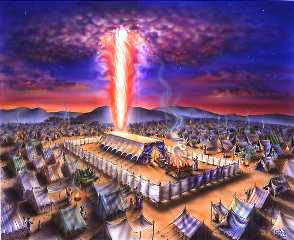
Rosh Chodesh Nisan.[1]  One of the most exciting moments during the Jewish people’s incredible forty years in the desert, and maybe the most exciting of all.  The Tabernacle has been established and Aharon the Kohen is invited to dedicate the altar and to bring the first sacrifice, a calf, which was the symbol of complete forgiveness for the sin of the golden calf: “He said to Aaron: Take yourself a young bull for a sin-offering… and offer… Moshe said to Aaron: Come near to the Altar… and provide atonement for yourself and for the people… Aaron came near to the Altar, and slaughtered the sin-offering calf… Moshe and Aaron came to the Tent of Meeting, and they went out and they blessed the people- and the glory of Hashem appeared to the entire people!  A fire went forth from before Hashem and consumed upon the Altar… the people saw and sang glad song and fell upon their faces.” (Leviticus, 9:2-24)  Everyone felt such excitement!  Hashem is with us, shining his countenance, forgiving, he wants us and our teshuva[2] and our sacrifices.  This Tabernacle, which we invested so much in, is finally standing, shining with light and bringing us closer and connecting us to the knowledge and the truth…

And today, in the desert of the 21st century, what about us?

Where are the Tabernacle and the sacrifices and appeasement?

What do we need to do in order to build something like the aspect of the Tabernacle?  In order to feel ‘that’s it, I’ve arrived, and now I’m in the Tabernacle and I can bring a sacrifice’?

When Rebbe Natan speaks about the building of the Tabernacle in our days, he speaks about Azamra[3]: “Because the main ability to pray only comes when a person finds in himself good points, which is the aspect of ‘I will make music to my God while I exist’… and this is the aspect of the prayer service where at the beginning we read passages about the sacrifices and incense offering, which are the aspect of clarifications, that means that we find and clarify the good points… and therefore before the prayer we say the passages of the sacrifices and songs of praise, that is to say that we clarify the good points and from this songs and music are made, and afterwards we build from this the Tabernacle, and that is where the main rectification of the prayer is.” (Likutei Halachot, laws of arising in the morning, first teaching)

‘Azamra’, one of the main identification tags of Breslov teachings.

Like a type of code word, like personal prayer (hitbodedut), like happiness (simcha) and clapping hands.

Azamra is one of the main lessons in all of Rebbe Nachman’s teachings:  “Because it is brought in the teachings of the Rebbe of blessed memory (Likutei Moharan, teaching 282, first part), that when a person brings to search for himself and sees that he’s very far from Hashem, and he’s full of many sins and blemishes and it seems to him that he’s far from good, then he needs to search and request and find in himself some good… and even though he sees that also the little bit of good that he did is full of blemishes, because it’s mixed with impurities, nevertheless it’s impossible that there cannot be found there a good point.  A person should continue searching and find in himself some more good.  And even if this good is also mixed with a lot of impurities, nevertheless there is in it a good point.  And he should continue to search and find in himself some more good points.” (ibid)

I look at myself and reveal, to my shame, that I don’t have anything good inside me.  I had a terrible day.  I woke up late.  I prayed without heart.  I ate meals without boundaries and order.  I lied.  I got angry.

In short, I was bad.

Now I sit for a moment of contemplation and I’m simply disgusted by myself.  I’m so far and I don’t have any good inside me.  What a shame!  It’s simply a shame that I don’t really exist here in this world.  People invest in me, help me, bring me closer, believe in me, and want me to be good.  I’m so small and messed up and unsuccessful.  Something small doesn’t go my way or according to my plans, and I already forget everything and turn from a believer to a non-believer, to someone who is taking from the person who so much wants to give, lacking boundaries and lacking knowledge, unlike the person who had wondrous knowledge yesterday.

Phew, I’m really repulsive.

Rebbe Nachman teaches us- you feel terrible, and I understand you, however, what do you think about searching inside yourself for something good?

I’m not telling you to deny all the bad that you did, I’m only asking you to search, inside all of the bad, maybe within that there is some good point?  Take a magnifying glass and scan all of your failures today, search well, dig to the depths, maybe amongst all the bad there is a very small good point?

A point is something small, the smallest.  Without length, without width, without depth.  Nevertheless it exists.  So search my friend.  You woke up late today?  It’s true, it hurts.  God willing that will be the last time that you wake up at such an hour.  However, what about the fact that in the end you did wake up?  What do you say, isn’t that one good point?

Maybe this good point is not exactly complete.  Maybe the fact that in the end you did wake up wasn’t even in order to pray on time, rather in order to answer a phone call.  Nevertheless, search for the microscopic point inside the good point, until you reach the good nucleus.  Here, you know what, if it was only in order to answer the telephone, you could have gone back to sleep in bed, isn’t that true?  You didn’t go back to bed, instead you rushed off to pray!

Here you have a good point!

It’s true that it is small.  Tiny.  Hidden.  It’s true that you want something different, more, bigger, complete, because what is even a point?!

Nevertheless, be courageous and agree to be comforted by this point.  Agree to admit that inside all of the bad there is one good point.  A point of self-sacrifice; you got up from your bed, with all of the great difficulty involved and despite your natural tendency to make up sleep in the morning, and you forgave this pleasure in order to grow and become holier.  Praise to you!

We have a tendency to ignore these small points, because they insult us.  It’s so small, and I wanted something so big, so it’s preferable not to even see it.

However, Rebbe Nachman tells us that if we want to reach greatness, we must value what is small, these tiny good points.  “And by way of this that he judges himself favorably and still finds in himself good points, even though he’s done what he’s done and messed up, by way of this he truly leaves condemnation and enters merit, and through these he can merit to make teshuva.  And this is the aspect of ‘just a little longer and there will be no wicked one; you will contemplate his place and he will not be there’ (Psalms, 37:10) – by way of this little point where he is not wicked ‘you will contemplate his place and he will not be there’.  And through this he can make himself happy, and then he can pray.” (Likutei Halachot, ibid)

Listen well- search for the good point that you have inside of you, find it, contemplate and be happy with it.  Be happy that amongst all of the bad things you find in yourself, there is also a complete point of good!

Value this good point, the little bit of good that you find, and suddenly you won’t find yourself.  That person who was ill tempered, filled with a guilty conscience, backwards, felt like a failure, tired, disappointed in himself, despaired, committed sins, and felt not good and not okay.  That person will disappear.  You’ll search for him, look at the place where he was a moment before, and you won’t find him.  He was there and he’s gone.

How?  Where did he go?

This is the secret.  The secret of ‘just a little longer and there will be no wicked one; you will contemplate his place and he will not be there’, just search for a little bit of good.  One small point of good inside all the bad and automatically you are launched upwards.  You’re already not there.  You are somebody else.  You are in a different place.

You have fulfilled ‘Azamra’.

[1] The first day of the new Jewish month of Nisan

[2] Repentance

[3] From a verse in Psalms which means ‘I will make music’

Parashat Tzav

More Complete with a Broken Heart

People tend to be frightened by tears because they relate the tears only to sadness, but truly tears because of a broken heart go together with happiness.  Pain which we feel without opposing it is life, but sadness is not pain, it is escaping from responsibility to a place of disconnection and separation. 

cry

Rav Yisrael Asulin

Translated by Moshe Neveloff

Monday, 11th of Adar II, 5776

BS”D

When the Torah speaks about the sacrifices, amongst the many technical instructions there is one word which is repeated over and over again, ‘soul’ (nefesh).

“When a person (nefesh) offers…” (Leviticus, 2:1), “A person who eats…” (Leviticus, 7:20), “If a person touches…” (Leviticus, 7:21).  Nefesh…

It is not written ‘when a man offers’, ‘a man who eats’, ‘if a man touches’.  No!  When speaking about the sacrifices the Torah speaks about the soul.

Why?

Because truly the whole matter of the sacrifices is not the technical act, it is the soul which is behind the act.  If this was so in the time period of the Temple, all the more so in our time, only our soul remains for us to offer it and with it ourselves.

So how do we offer our souls?  How do we bring them closer to Hashem?

How can we raise up the soul to a holier, loftier and more illuminated place without offering an actual elevation offering[1]?

Rebbe Nachman explains: “’The sacrifices God desires are a broken spirit’ (Psalms, 52:19), it is known that a person needs to bring an elevation offering because of the stirrings of the heart, as it is written ‘As for what enters your minds.’ (Ezekiel, 20:32)  That means that the elevation offering comes from the thoughts of the heart, which is the dwelling place of the spirit.  The aspect of the elevation offering is that a person has a broken spirit inside, and he is embarrassed and thinks to himself ‘how did I fall and I was thrown from the heaven to the earth.’  I was in such a high place, and now, I’ve fallen and turned away from Hashem, and I find myself left behind.  This person needs to have mercy on himself, because there is no mercy which is greater than this.  And this is the aspect of the elevation offering… which is a broken spirit…” (Likutei Moharan I, 108)

So what is the work we need to do in our soul, which takes the place of the elevation offering?

A broken heart.

Seriously?!  Rebbe Nachman encourages people to reach a broken heart?!  Rebbe Nachman, who spoke so much against despair, sadness and depression, he himself encourages people to have a broken heart.  How can this be?!  Is this not a contradiction?

Yes, this is surely two concepts which contradict each other.  We are speaking about two concepts which are completely separate from each other, and the evil inclination, who invests so much to confuse us, joins them together: “A broken heart and sadness are not the same thing whatsoever.  Because a broken heart is found in the heart, but sadness comes from the spleen and it is from the evil inclination and Hashem hates it.  However, a broken heart is beloved before Hashem and very precious in his eyes… therefore a person needs to set aside an hour a day to have a broken heart, that is to say to be alone in personal prayer and break his heart before Hashem, but all the rest of the day he should only be happy.” (Rebbe Nachman’s Wisdom, 41)

There is something which is called ‘sadness’, and it is negative and comes from the evil inclination and Hashem hates it!  In contrast, there is something which is called a ‘broken heart’ and it is beloved and very precious in Hashem’s eyes.

It’s true, on the outside it might seem to be the same thing.  People see someone crying, what immediately goes through their head?  ‘Why is he sad?’  But who says that he’s even sad, maybe he actually has a broken heart?  It can come with the same tears, the same size, the same color and the same saltiness.  It can sound like the same sighs or with the same variety of screams.  Nevertheless, it is completely different.  Because one Hashem hates, and the other is holy before Hashem.

So, if they are so similar, how can I know if I’m sad or if I have a broken heart?

Rebbe Nachman has a way of identifying: “And this is the sign if he has a broken heart, when he is happy afterwards” (Rebbe Nachman’s Wisdom, 45), in contrast: “The desire for physical relations and the desire for money come only from sadness and from there all kinds of sorrow come, God forbid.” (Likutei Halachot, the laws of thankfulness, 6th teaching)

A broken heart brings a person to connection, to vitality, and to happiness.  Sadness brings someone to disconnection, to despair and to sin.

If you meet the pain, cry over it, scream because of it, feel it to the deepest depths without fear, and you leave the personal prayer with a feeling of relief and even with a smile, then you are going in the right direction.

However, if you feel despaired and angry, don’t believe in anything, don’t hope for anything, you’re sunken in depression and escape to different types of addictions, then you should know that this is not a broken heart, it is sadness.

When we want to work on ourselves and grow, we must know how to differentiate between the two of them.

People tend to be frightened by tears because they relate the tears only to sadness, but truly tears because of a broken heart go together with happiness.  Pain which we feel without opposing it is life, but sadness is not pain, it is escaping from responsibility to a place of disconnection and separation.  There are those who think that to come to therapy, to engage in personal development work or personal prayer means to sink in sadness in order to awaken mercy and to concentrate on being miserable.

This is not true.

It is permitted to feel pain.  We need to feel pain.  It is even a mitzvah to feel pain.  If you escape from the pain you are not truly living.  However, together with this, we don’t want to be sad.  If you are sad, don’t think that now you are working on personal growth.  Because personal growth work is supposed to come with happiness, with light and with lightning in the eyes.

Nevertheless it is not simple.  How is it possible on the one hand to deal with the pain, to look it in the eyes without escaping, to feel the pain and be broken, and on the other hand not fall into sadness?  They are so close, a broken heart and sadness!  Where is the boundary?  Where is the dividing line between them?  How do we walk in this path?

The answer is faith.  Faith is our signpost.

If you feel pain with faith, faith that everything comes from Divine providence, also the pain that you’ve gone through and also the pain of people close to you.  Also the pain which others caused you to feel and also the pain that you cause others to feel.  Faith that Hashem is here, in the past, present and future.  Faith that everything has meaning.  Faith that everything is good; even if things seem bad, everything is actually good.  Faith that you are good, even if you feel like a villain, you are good!

If you feel pain with faith, you have a broken heart.

In contrast, if you feel pain without faith and you’re sure that you are guilty and bad and not okay, that you have no chance, that the world is collapsing and that everything is chaos, my precious friend, pay attention, if you reached this place, you made a mistake.  Stop.  You are falling into sadness.  Go in reverse.  Put the lights on and return to the boundaries of faith.

In faith.

[1] A type of offering which was completely burned on the altar

Parashat Vayikra

My Place

This is the place to find yourself… ‘Here’, it is written with letters of fire on the door of personal prayer, ‘here you will find yourself and everything that you lost!’  So, if personal prayer is so amazing, why can’t many of us succeed in doing it?  Why do we receive upon ourselves to do personal prayer and then stop, or forget, or we just don’t feel like it, or we really want to but we don’t get to it?

hitbodedut

Rav Yisrael Asulin

Translated by Moshe Neveloff

Monday, 4th of Adar II, 5776

BS”D

One of the things which the Torah details in very fine detail is the sacrifices.

The different types of sacrifices receive preference in the Torah, and there are tens of positive and negative commandments connected to the sacrifices which appear in the Torah with detailed and exact descriptions, including those which seem to be technical and seemingly un-important.

Why does the Torah do this?

Because the sacrifice is not a cow or a lamb.  A sacrifice, like its name (korban), is a way of coming closer, to bring the Jewish people closer to Hashem: “When a man among you brings an offering to Hashem.” (Leviticus, 1:2)  How can the Jewish people come closer to Hashem since the Temple was destroyed and we were exiled?  “And let our lips substitute for bulls.” (Hoshea, 14:3)  Rebbe Natan teaches: “Because the main aspect of the offering in this time is prayer.” (Likutei Halachot, Laws of the mincha prayer, 7th teaching)

Beyond the daily prayer order which the Sages instituted for us, there is importance in praying to Hashem in your own words, as the Rambam[1] teaches: “It is a positive commandment to pray every day… the obligation of this mitzvah is the following: a person should supplicate and say the praises of the Holy One, blessed be he, and afterwards ask his needs with request and supplication and afterwards say a praise, each person according to his ability.” (Mishneh Torah, Book of Ahava, Laws of Prayer, first chapter)  What prayer is more fitting to the expression ‘each person according to his ability’ more than personal prayer…?

Personal prayer, a world in and of itself…

This is the place to find yourself… ‘Here’, it is written with letters of fire on the door of personal prayer, ‘here you will find yourself and everything that you lost!’

Every day you go through millions of things.  At work, at home, with your spouse, with your children, with the neighbors (they are renovating now, what noise… terrible!), on the crowded road, in the synagogue, at the bank, at the market, in the city, in the village… every place, all the time.

You go through an endless amount of things.  Something annoys you, or makes you angry.  Someone causes you pain, or hurts you, or makes you happy, or makes you worry or causes you tension…

To some of them you don’t even pay attention because you’re rushing so much on the expressway of life, swallowing kilometers with a speed which doesn’t register on the speedometer, galloping forward, trampling underneath yourself tiny buds of feelings.  How can you even try to feel what you’re going through when you’re rushing so much in order to get everything done; to run, to bring, to take, to return, to succeed, to understand?!

Until… you come to personal prayer, your personal space.  You give a place to your feelings and everything you’re going through, inside yourself.

Here you are not rushing anywhere.  Here you don’t need to get anything done.  Here you sit, breathe your first breath of the day (because breathing from shortness of breath is not called to breath!), exhale in reaction, and ask yourself quietly ‘So how are you?  How do you feel today?’

Here you can say everything, also what is not polite or accepted or what sounds strange.  Here you can do everything, to jump or dance.  To sing, even if you’re faking it.  To shout or roar.  To cry outload, or laugh freely… here you can get off the highway which is stealing your life, and to be for an hour yourself…

So, if personal prayer is so amazing, why can’t many of us succeed in doing it?  Why do we receive upon ourselves to do personal prayer and then stop, or forget, or we just don’t feel like it, or we really want to but we don’t get to it?

Because we are afraid.

Afraid to meet ourselves.

Why are we afraid to meet ourselves?

Because we have a basic outlook regarding ourselves which says that we are bad, or crazy or both of them together.  All our lives we are trying to hide this.  From ourselves and from the whole world.  Because if someone will reveal this, I’m lost!  Please save me, so that no one in the world, including myself, will know that that’s who I am!

There are those who are busy all their life creating something artificial, because they are certain that they are deathly boring, and if they will enter a room without distractions, someone will surely be appalled by the boredom.

There are others who always carry with them a feeling of guilt.  They don’t exactly know what exactly they are guilty of, but it is clear to them that they did something terrible, and immediately someone will come and reveal that they are guilty.  Therefore they are busy pleasing others, and being okay, as much as possible, much more that the accepted norm.  As long as no one is suspicious… for them to enter a room is to meet possibly, God forbid, this guilty and accused person.  The one who it’s impossible to forgive, because his sin is too great a burden.

There is also the emptiness; I have nothing, everything is empty, and I don’t want to meet this.  Fill my day and the empty space with sights and voices!  Just don’t let me have quiet and be by myself!

In this basic outlook, to meet ourselves is to meet all the bad that I did and that was done to me, all the places where I made a mistake, and how much I’m not okay and not normal and not… so enough.  We don’t have strength and we prefer to escape.

But there is waiting for us there inside the level which is higher and greater than anything!!!  We do want to merit this level!!

How is it possible?

There are many pieces of advice.  There is one advice which is greater than any other, and that is to prayer about the personal prayer.

If I understand that I want to have personal prayer and at the same time I’m suspicious and I push it off and escape to all kinds of other obligations, it’s come time to stop, to enter into a room and say: ‘Abba, a true good friend, I want to speak with you about the personal prayer.  They told me this is the greatest level which is above any other.  They told that this is the way to obtain all the good.  Not just any person told me this, this is the instruction of the healer of souls!  Abba, I want to do personal prayer!  But look at me, a day goes by and another.  I come one day and run away for a week.  I want to do personal prayer and at the same time I’m afraid and prevent myself.  Come let’s speak about my personal prayer, Abba.’

The best advice for you is the advice you’ll find yourself.  When you speak with Hashem about your difficulty to do personal prayer, you’ll find the phrase which is the most exact, the realest and the most focused for you, how to do personal prayer.

Because after everything, it won’t be another article that you read or a class that you heard.  This will be your direct and very close speech with Hashem.

[1] Maimonides

Parashat Pekudei

This is My Movie

We have so many theories and conclusions and opinions and criticism and blame about the world outside. There are so many things which seem to us to be true about the outside world, and we even have colorful proofs, flickering on a white screen.  However, truly, we are just projecting!  We are actually receiving a reflection… Our reaction is not connected to the factual reality, rather to our personal outlook on the reality.  Our outlook depends upon the makeup of our soul.

film projection

Harav Israel Asulin

Translated by Moshe Neveloff

Monday, 27th of Adar I, 5776

BS”D

“What can I do?  That’s the reality!”  Do you recognize this statement?

“Reality, that I was born to parents like these… and siblings like these… and I have neighbors like these… and also my children are like this… that’s the reality and how can you argue with reality?!”

How?  Is it true that it’s impossible to argue with reality?  Behold I see it with my eyes and it’s not a mirage, and I’m not hallucinating and not imaging and I’m not in the middle of a dream.  That’s the reality…

Is it really?!  Who actually creates the reality?

In this week’s Torah portion, Pekudei, Moshe Rabbenu[1] sits and conducts an exact accounting of the amounts of donations which were donated to the Tabernacle and what has been used: “These are the reckonings of the Tabernacle, the Tabernacle of Testimony, which were reckoned at Moshe’s bidding. (Exodus, 38:21)  “In this Parsha all of the weights of the donations to the Tabernacle of silver, gold and copper are enumerated.” (Rashi’s[2] commentary on the same verse)  For what purpose does he do this reckoning, and who is he reporting it to?

The Midrash explains:  “This is what is said ‘they looked behind Moshe’, and what were they saying?  Rebbe Chama taught that they were saying: ‘Look at the fat neck of the son of Amram (Moshe), and another person answered: ‘Someone who controlled all of the work of the tabernacle, you don’t want him to be rich?!” (That is to say that Moshe stole from the donations to the Tabernacle!!)  “When Moshe heard this, he said to them: ‘your life (a language of taking an oath), we’ve finished the Tabernacle and I’ll give you the bill.’  That is what is written: ‘These are the reckonings of the Tabernacle, the Tabernacle of Testimony’.” (Midrash Raba on the book of Exodus, 51:4)

This sounds a little shocking!  Behold who are we talking about here?  About Moshe Rabbenu, the leader of the nation, the chosen one of Hashem, the one who received the Torah.  Who is speaking about him?  The Jewish people, who were a generation with knowledge, who saw eye to eye that Moshe is truth and the Torah he received is true, ‘and they believed in Hashem and Moshe his servant’!

So how is it possible to suspect that Moshe is a thief???  And how did the Jewish people let a thought like this enter their minds???

A fundamental question, and in order to answer it we need to have a deep understanding of a hidden phenomenon of the soul, which Rav Wolbe[3] called ‘a magical flashlight’.

The magical flashlight is an internal process of projecting shortcomings, feelings and experiences on our surroundings.

We all walk around here in the world with a portable projector close to the scalp, a hard drive filled to the point of bursting with raw, secretive, hidden films, with a microphone which is hermetically connected to our minds and hearts, and an emergency button which wails hysterically… and all of the people in the world, and all the events, and situations, and episodes and places, everyone and everything is seen on giant split screens.

And we are the ones playing the film…

It seems to us that that’s who he is and that’s who they and the same is true for everyone in the world.

It seems to us that the reason for our angry mood is because of someone or something else around us.  It seems to us that he’s a thief and he’s an exploiter; this person has no tact and the other person is lacking manners in a terrible way; he’s ridiculous and lacking self-respect; they are lacking awareness and selfish; she’s too sensitive and spineless and melts like butter…

We have so many theories and conclusions and opinions and criticism and blame about the world outside us, beginning with ‘corrupt’ ‘greedy’ and ‘lying’ politicians and ending with the neighbors, behold he’s an insignificant person lacking education and intelligence…

There are so many things which seem to us to be true about the outside world, and we even have colorful proofs, flickering on a white screen.

However, truly, we are just projecting!  We are actually receiving a reflection…

Our reaction is not connected to the factual reality, rather to our personal outlook on the reality.  Our outlook depends upon the makeup of our soul.

Rebbe Natan says: “Because it’s impossible to clarify and prove the truth with proofs by any means.  Because anyone can make a contradiction based upon argumentation and say against your word false stories and false proofs, contradict and hide the truth, God forbid.  However, the main way of discerning the truth is in the heart, every person according to what he understands in his heart.” (Likutei Halachot, Laws of the morning blessings, 3rd teaching, 11th paragraph)

We know so little about ourselves.  We project so much onto other people.  We blame, get angry, are suspicious, scared… when really, it’s just what I experience!

Rav Wolbe explains how this magic in the soul works inside everyone, also regarding the generation that lived in the desert: “In the Torah itself we find this internal process: ‘You slandered in your tents and said, Because of Hashem’s hatred for us did He take us out of the land of Egypt, to deliver us into the hand of the Amorite to destroy us.’ (Deuteronomy, 1:27)  Rashi explains: ‘Because of Hashem’s hatred for us’- and He loved you, but you hated Him.  There is a parable which says ‘what is in your heart regarding the one you love is what is in their heart for you.’

A subtle hatred built up in the hearts of the people of the generation of the desert against Hashem, despite their tremendous holiness.  They never admitted this to themselves, because they weren’t aware of this at all.  Behold, the magical internal flashlight showed them the opposite of what was in their hearts, and they said that Hashem hates them.  They believed in this and suffered because of this a terrible sorrow.  It seemed to them that they loved Hashem and aspired to come close to him with all their hearts, however for some reason Hashem didn’t desire them anymore…

This concept is brought as halacha[4] by the Rambam (Maimonides): ‘Someone who always disqualifies others, for example he says about families or individuals that they are illegitimate- we suspect him, that maybe he is an illegitimate child.  If he says about them that they are slaves, we suspect that maybe he is a slave.  Anyone who disqualifies, he disqualifies his own blemish.’

Certainly this person who disqualifies doesn’t know about his blemish, because if he would recognize it and remember it, he would prevent himself from saying it about others, so that his own lacking would not be revealed… but in the hidden chambers of the heart, in the deep layers of his soul the blemish has not been forgotten- and the magical internal flashlight projects his own blemish on to others, to disqualify other people.” (Alei Shor, pages 162-165)

Incredible! Incredible and shocking!

This also explains the wondrous and foolish suspicion of Moshe Rabbenu.  You don’t need to be crazy in order to suspect Moshe of stealing, it’s enough to be a person with a desire for money, to see Moshe deal with so much silver for building the Tabernacle, and to make a simple calculation in the sub layers of the subconscious: ‘If I had been there, I would have pocketed at least a million shekels; Moshe is more of a Tsaddik than me, so it’s almost certain that he took a half a million’… and from there, it is a short path to speak behind Moshe’s back and to spread assumptions, which the irony of them screams to the Heaven: ‘Look at the fat neck of the son of Amram’; ‘Someone who controlled all of the work of the tabernacle, you don’t want him to be rich?’

This causes shivers!  We are really people like this?!

However, it also opens for us an opening to enter the very holy and lofty work of taking responsibility for our experiences.  To contemplate inside, close my eyes to the ‘reality’ on the screens on the outside, to get to know the internal software, and to remember that everything begins with me!  Everything that I absorb from the outside is only my light reflecting back into me.  In the end it’s all my movie!


[1] Our Rabbi

[2] A major Rabbi of the Middle Ages, wrote a commentary on all of the Bible and Talmud

[3] An important Rabbi from Jerusalem, lived from 1914-2005

[4] Jewish law