Parashat Massei

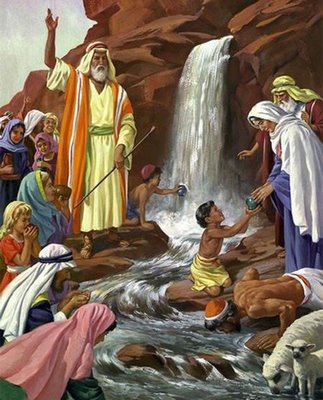
You Need a Desert After we scream and call for help and acknowledge that we are weak and choose the holy land and are willing to sacrifice ourselves, for our complete healing, or for our spouse, or for both of us; then Hashem sends us Moshe to take us out of Egypt. This is when our test begins… Desert Safari - Amram's Pillars

Harav Israel Asulin

Tuesday, 27th of Tammuz, 5775

BS”D

“These are the journeys of the children of Israel who left the land of Egypt…” (Bamidbar[1] Chapter 33, Verse 1). In the parasha[2] Massei the holy Torah tells us about the forty-two journeys that the nation of Israel traveled in the desert. Forty-two stops, that began at the exodus from Egypt and came to their culmination with the entrance to the land of Israel. The discussion of these journeys- as our holy sages teach us- it is not a historical or archeological documentation of an ancient journey; rather it is an exact and actual discussion relevant to every Jew, where ever they find themselves in their lives. “All the journeys were forty-two and they are for every man from the day of his birth until his returning to the next world…” (The ‘Degel Machanei Ephraim’, accredited to his grandfather, the holy Baal Shem Tov). So let us listen to the whole story from the beginning: The nation of Israel leaves Egypt with a clear promise to inherit the land of Israel. Instead of landing, straight from the miracles on the sea- to the receiving of the Torah, and from there a quick jump to the Promised Land, a long journey in a desolate land begins. This journey, as in the parable with the generation in the desert that took place thousands of years ago, is also the lesson for every one of us. It is a journey that requires a lot of emunah[3]in Hashem, in Moshe, and in ourselves. The beginning for everyone in every area is in Egypt. In our relationship with Hashem, in our relationship with ourselves, and in our relationship with our spouse, they all start in Egypt. The beginning is disconnect and exile and complete slavery to Pharaoh. I don’t know who I am, I don’t know who Hashem is, and it doesn’t really interest me who my spouse is, as long as Hashem doesn’t interfere with my life with some sort of earth shaking tragedy. If my wife still prepares for me good food and good laundry services, in my opinion why not spend the next eighty years in the shadow of Pithom and Ramses and Pharaoh’s Nile River. Then Egypt started to pressure us and to limit our steps. Everything begins to screech and to whistle and to shake. Your health is not what is used to be and the children are screaming the scream of your wife and your livelihood and your neighbors…something is happening and you are waking up to realize that you are really in exile and enslaved. After we scream and call for help and acknowledge that we are weak and choose the holy land and are willing to sacrifice ourselves, for our complete healing, or for our spouse, or for both of us; then Hashem sends us Moshe to take us out of Egypt. This is when our test begins. When we are leaving Egypt we don’t have patience, we want to get to the Land of Israel, to find serenity and to settle immediately and without any stops along the way. This desert, and these forty-two journeys, arouse within us our sense of justice: You said we were going to be redeemed, correct?! You said we only need to come and then we will be healed, correct?! So here I am! Why does everything continue to stay black? You spoke about the Land of Israel, so why am I in the desert??…and it doesn’t end! Look a little at the names of the places that are written in this Torah portion, and see the stops that we are passing in our lives: ‘Marrah (Bitterness)’, ‘Charadah (Anxiety)’, ‘Rephidim (where Amalek attacked the nation of Israel)’, and ‘Kivrot Hatavah (Burial of Lust)’…and this is how we falter in the desert, instead of settling down in the Land of Milk and Honey. Why? The Chassidic sages explain to us that any real relationship needs a desert first. You are requesting the real, complete, and lofty relationship? You are searching for the connection with yourself, to your strengths, to your soul, to your life’s purpose, to your ‘Lost Princess’? So this is the way- “He traveled back and forth for a long time, through deserts, fields, and forests, and searched for her (the ‘Lost Princess’) for a long time.” (Rebbe Nachman’s Thirteen Tales, The Lost Princess[4]). You want a relationship with Hashem? So try personal prayer, and instead of meeting angels, you meet the emptiness and the lacking and the boredom and ‘no words’ and ‘no strength’ and ‘no desire’ and maybe it is enough to try personal prayer once a month or every two months or once a year?… You want to connect to yourself? Start to work on yourself, and meet the hurt child within yourself, and recognize the addictions that infiltrate your life. Start getting to know the desert and the snakes and scorpions that you have inside yourself! You want a relationship with your spouse? Only by way of a desert! Start to devote yourself even when you don’t feel anything and don’t know what love is. Begin to obligate yourself and sacrifice your soul for your obligations, even when surrounding you everything is desolate and profane and without reason and enjoyment. Why is it like this? Why do all real relationships need a desert first? Only in the desert can you find your path on the side. Just as Rebbe Nachman says in the tale of The Lost Princess: “Finally while traveling through the desert; he saw a path to the side. He thought it over, ‘Since I have traveled for so long in the desert and cannot find her, let me follow this path. Perhaps it will bring me to an inhabited area.’” So what is a desert? A desert is the wilderness. There is nothing. Everything is barren. Everything is arid. There is no water, no food and no shade. You need to build everything anew. You need to invent. You cannot rely on the good of Pharaoh that he will give you something to drink or to eat or a place to sleep. In the desert you are the first explorer. From this empty desert without an outlet, you will find something from nothing, your individual path to the ‘Lost Princess.’ [1] Numbers [2] Torah portion [3] Faith [4] This first of Rebbe Nachman’s Thirteen Tales, literally the title should be “Loss of a King’s Daughter”. The ‘Lost Princess’ refers to our soul, and the story is a parable of our journey to find our connection with our soul and G-d.

Parashat Pinchas

There Is No Despair

Correct, your situation is lousy and you have fallen into all of the pits and bumped into all of the walls.  There is still one place that you haven’t been, in the ground. Indeed you know the ground very well and are friendly with it, you tread with your nose sunken in the ground and feel like a lump of matter lacking hope.  But from the inside- you still have not seen what it is like.אפשר לתקן

Harav Israel Asulin

Tuesday, 20th of Tammuz, 5775

In everyone one of us there exists basic emunah[1], which we received from our forefathers, Abraham Issac and Jacob; emunah that it is possible, we will succeed, we will overcome, and it will be good.

However there are things that appear to us that regarding them there is already no hope.  It is already too late and there is no chance.  We missed the boat and the moment has passed us by and from here these is only despair and helplessness.

Do you recognize the places where you have lost in them emunah– and specifically in a rational and weighted out way with reality and with the statistical data and probability…?

This child, this relationship, this craving, this addiction, and these behaviors…

We’re done.  I am already at the edge.  From here there is no way out!

This child? – I have already made all the possible mistakes.  From the time he was born, I have only acted with him in a stupid and destructive way. So that’s it.  It’s all over for the child, for us, for the child’s future.  It’s all over for our relationship.  It’s sad, but that’s the reality.

This addiction? – Maybe once, before I started to taste and to enjoy and to stoop over the alcohol or the internet like it was oxygen, maybe then there was a chance for a sane life; but now I am already hooked on them and suck from them life.  It’s hard for me, I would want to quit and start to live, but there is no chance.

This is true in all the areas of life: This marriage? – Failed and finished! My spirituality? – From the time I have become knowledgeable I have worked to disappoint Hashem.  I have sinned all the sins, I have reached the worst state.  So we’re finished, there is no chance.  Maybe once, when the situation was still reasonable, when the filth was separate from me and not welded to me and a part of me; maybe then there was a place for this discussion about repentance and service of G-d.  Now it’s too late, sorry.

***

This week’s Torah portion reveals to us that there is no such thing as too late and there is no place without a way out.

After the big plague that annihilated many of the children of Israel, Hashem commands Moshe and Elazar the Cohen to count the nation, in order to know who the remaining people are.  The verse details: “These were the families of the family of Levi: the family of the Libnites, the family of the Hebronites, the family of the Mahlites, the family of the Mushites, the family of the Korahites…” (Bamidbar[2] Chapter 26, Verse 58).

It’s not understandable, who is the family of the Korahites?  Behold, Korach and everything he had was swallowed into the ground!

Preceding this verse it is mentioned that: “Korah’s sons, however, did not die” (et al, Verse 11).  Rebbe Natan says – “Amongst the great noise of the swallowing, the sons repented… and they held steadfastly and did not enter hell, like it our Rabbis, of blessed memory, said on this verse ‘Korah’s sons, however, did not die’.  From them came the great descendants who Korach prophetically saw, which were the holy generations of Shmuel etc. who revealed G-d in this world.”  (Likutei Halachot[3], Hilchot Netilat Yediim L’seuda, Halacha 5)

The sons of Korach were partners in their father’s disagreement and were swallowed with him in the stomach of the ground.  However, at the entrance to hell, amongst the great noise of the swallowing, they repented, and due to the strength of their repentance they merited to a great miracle that ‘they held steadfastly and did not enter hell’.  They merited to leave the depths of the ground and to have lives of holiness, and to be the ones from which the prophet Shmuel was born and twenty-four guards of the priesthood!!!

Do you understand this, my dear Jew?

Our holy Rebbe, Rebbe Nachman, promised that “If you believe that you can destroy- believe that you can repair” (Likutei Mohoran Tanina, Torah 112)[4].  He was referring to all types of destruction, on one side, and the complete and eternal repair, on the other side!

When our holy Rebbe screamed that “There is not despair in the world” (Likutei Mohoran Tanina, Torah 78), he brought into account all the situations and all the worst case scenarios in the world!

Here is tangible and amazing proof from the sons of Korach.

***

Correct, your situation is lousy; you have fallen into all of the pits and bumped into all of the walls.

There is still one place that you haven’t been, in the ground.

Indeed you know the ground very well and are friendly with it, you tread with your nose sunken in the ground and feel like a lump of matter lacking hope.  However from inside- you still have not seen what it is like…

There are people who saw the ceiling and not only the floor.  There are people who were swallowed by the ground completely, hermetically.  Not in poetic phrase, not in similes or in imaginary theories; real life.

There are people whose actions brought them into the stomach of the ground, and buried them in the foam of fury and anger.

Then they repented.

In the merit of their repentance they were saved from there.

From now on, it is not worthwhile to be some shocked scarecrow, stuck in the ground like a couch potato and sigh the rest of your days about the hard trauma that you went through in the stomach of the ground…

Rather, it is worthwhile to have the prophet Shmuel come from you, who is comparable to Moshe and Aharon, the leaders of the nation!

[1] faith

[2] Numbers

[3] Rebbe Natan’s explanation of the Shulchan Aruch (Code of Jewish Law), based upon Rebbe Nachman’s teachings

[4] The main collection of Rebbe Nachman’s teachings

Parashat Balak

The Power of Choice

When we think about this deeply, we are shocked.  As long as we discuss the evil Bilam and his choices, we can look at him from the side and become angry at his inflexibility and his horrifying impurity however when it comes close to us and touches our choices, it begins to stress us out.

balaam_and_talking_donkey

Harav Israel Asulin

Wedsnesday, 14th of Tammuz, 5775

BS”D

One of the most amazing and exceptional things that we learn from this Torah portion, is the matter of the power of choice.  As Rebbe Natan says in Likutei Halachot[1] (Orach Hayim- Hilchot Birkot Ha’shachar, Halacha 5): “We see in this Torah portion about Bilam, the principle of the power of choice in the matter of him going to curse Israel, G-d forbid; and how Hashem acts with him; because he had a very strong desire to curse them…”  Bilam, the son of Beor, so badly wanted to curse Israel, we was on fire with desire and vigorous with urge.  He was a solidified mass of passionate yearning to curse.  He knew that Hashem loves Israel with extra love.  He knew that the nation of Israel was the chosen people and the blessed amongst all the nations.  He knew that no father would give permission to curse his sons, in any situation.  Nevertheless, he is stubborn.  “In spite of the fact that he discovered that everything is in the hand of Hashem; he still went on his way to continue with his same desire…”  Hashem says to him, ‘You shall not go with them! You shall not curse the people because they are blessed’ (Bamidbar[2] Chapter 22, Verse 12)”[3].   Everything that he hears is “don’t go with them”- with the original ministers Hashem does not let him go, but if Balak brings him ministers that are greater than them- then there is a chance.  Balak[4] sends to him ministers that are superior, and again Bilam waits to speak to Hashem, maybe this time Hashem will be persuaded?  “And then when they came a second time and Hashem saw that he had strengthened his impure will to go, Hashem said to him: ‘If these men have come to call for you, arise and go with them’[5]…”.  Bilam arises in the morning, full of fervent hatred, saddles his donkey, without waiting for his servants to do so, and joins the messengers of Balak- happy to curse Israel.  “After this when he went, his donkey stood there three times and was oppressed by the angel that came toward him to follow him.  He did not pay attention to this and went on his evil way, until Hashem opened his donkey’s mouth and spoke to him and reprimanded him.  Afterwards Hashem revealed to him the angel who was positioned toward him with a drawn sword… nevertheless Hashem did not want to nullify his will and said ‘if it displeases you, I will return’[6], as a protest to Hashem… and Hashem responded to him according to his will ‘Go with these men’[7].  It was all because of his choice, like our Rabbi’s of blessed memory said on this Torah portion ‘on the path a man wants to go, in that way he is lead’[8]…”[9]

Terrifying!

A person wants something, he asks Hashem and Hashem says to him no.  He continues to want, and becomes wise, and hints to the messengers of Balak that they are not important enough for him, and with more enlightened and exalted messengers, perhaps then he would be allowed to come… he does not relax.  Until Hashem says to him- do you know what? You want so badly?! So go with it; please, whatever you want. Get up, and go with them.

***

What does this mean that Hashem agrees with him?  That this is the correct path? That he is going the right direction?  No. It means that this is a bad and mistaken path that leads to destruction.   Then why does Hashem let him go?  Why does Hashem say to him “If these men have come to call for you, arise and go with them”[10]? He should forbid it with a serious prohibition.  He should not be able to go.  He should make an earthquake or a Tsunami.  He should explode the walking trails to Moab and its entire infrastructure.  He should make a flood.  He should mix up their language.   He should block him from going!  Why does he let him walk in this destructive path?  Not only does not he even exert against him an opposing force, he even says to him: “Ok, you can go,” why?  Says Rebbe Natan:”Because this is an important fundamental rule that the entire world was created for choice.  Therefore choice has a very big power.  The principle part of the power of choice is by means of Hashem hiding and concealing his will with great concealment…”[11]  This world is called “Olam” from the language of concealment and forgetfulness.  There is an idea that the will of Hashem is hidden, there is an idea that the Satan will succeed and make us forget the reality of Hashem.  There is an idea like this.  So we will be able to choose.   So we won’t be like puppets.  So we won’t be forced.  So we don’t have only one path, rather a few paths, and that we choose life.

When we think about this deeply, we are shocked. As long as we are speaking about the evil Bilam and his choices, we can look at this from the side and become angry at his inflexibility and his horrifying impurity, however when it comes close to us and touches our choices, it begins to stress us out.  Think about this; this is really dangerous!  Correct, I want good.  But what if I make mistakes and lose my direction?  I am only a man in a world of concealment, with an evil inclination and desires and an enormous power of choice, and even without the power of prophecy that rested upon Bilam!  In the direction I want to go, I will be lead?! What does that mean I will be lead? It means that there is a path I am supposed to go on, and I suddenly chose to turn left to the bad side, they don’t place a barrier and puncture my tires, and they don’t turn off my headlights and put down axes with the command “stop”.  Rather they pave the roads for me and alternate roads and they exchange for me my Subaru with a Jeep and a full tank of gas and a good engine, which will take me on my way.  They help me on this path!  I am lead on my mistaken path that I chose!

***

Is there advice to be saved and to remain with the good?  This question takes us back to personal prayer which Bilam relates to with curses that are turned into blessings:  “it is a nation that will dwell alone” (Bamidbar Chapter 23, Verse 9)- a nation that has personal prayer.  A nation that for an hour a day separates from the ways of the world and turns a back to the race and to the interests that trick us; and speaks to Hashem.  Personal prayer is our place to speak about our true desires.  To tell about the forces that pull us toward the bad, about the difficulties, about the evil inclination and his soldiers that portray to us black as light and pleasant.  To request our true good, that after everything and before everything- only this we want.  Master of the world, more than everything, more than ice cream and money, more than success and honor, I want you the most in this world.  I yearn for you.  I long for you; to come close to you and to serve you alone.  This is my true will, creator of the world; this and nothing else.  So please, only guide me there.  Only make this path clear to me, and when I look for you- answer me.  When I am mistaken- return me to you.

If I want and speak about my will, over and over again multiplied exponentially, then it is clear that I will receive the abundance of Hashem, even through a change of nature.  About this said our Rabbis of blessed memory:  ‘Everything is in the hands of Heaven, except for fear of heaven’[12]– that all of the prayers that a man prays, they are given into the hands of Heaven to receive them or not, but a man who prays for fear of Heaven; to merit to know the path that he should go, then for sure his prayers will be received and he will merit the revelation of Hashem!!

[1] Rebbe Natan’s explanation of the Shulchan Aruch (Code of Jewish Law), based upon Rebbe Nachman’s teachings

[2] Numbers

[3] Likutei Halachot et al

[4]King of Moab, son of Zippor

[5] Bamidbar et al, Verse 20

[6] Bamidbar et al, Verse 34

[7] Bamidbar et al, Verse 35

[8] Gemara Makot Page 72

[9] Lekutei Halachot et al

[10] Bamidbar et al, Verse 20

[11] Lekutei Halachot et al

[12] Gemara Brachot 33:72

Parashat Chukat

Without Blows

Think about this situation: A dry and desolate desert, an entire nation hysterical from dehydration, and one big, hard and dry rock. What everyone wants right now is only water, a lot of water, and enough water. How can they receive this water?

water-from-the-rock2

Harav Israel Asulin

Tuesday, 6th of Tammuz, 5775

BS”D

In this week’s Torah portion, after a forty year supernatural trek in the desert, accompanied by the clouds of glory and the manna and Miriam’s well; something changes.   The prophetess, Miriam, passes away, and along with her passing her well also disappears. In Miriam’s merit, her well provided the entire nation with water during their forty years in the desert.

Now the nation of Israel has nothing to drink.

Moshe and Aharon pray before Hashem and Hashem commands Moshe to take his staff: to gather the entire congregation around some rock and to talk to the rock in order to bring water forth from it, to provide the entire nation with water. Then the mistake occurs, Moshe hits the rock instead of speaking to it. Even though the hitting caused water to come out of the rock, this incident also caused Moshe and Aharon to be punished with a severe punishment – they would not merit entering into the land of Israel.

One needs to understand, what is the significance of this story? What was Moshe’s critical mistake, the mistake that he and Aharon were punished for with such a severe punishment, that they would not be allowed to enter the land of Israel? What is the big difference between hitting a rock and talking to a rock?   In any case, a great and open miracle still happened when a dry rock brought forth water in the middle of the desert, so what’s the difference between using words or blows?

Rebbe Nachman explains in Likutei Moharan (Torah 20): “This is the mistake that Moses made, Hashem spoke to Moses saying, ‘Take the staff and gather together the assembly, you and Aaron your brother, and speak to the rock before their eyes[1]’, he should take from his mighty leadership that he received from his good deeds and actions, and ‘gather together the assembly’. Because at the time when Moshe gathered the congregation, there were amongst them evildoers- and he needed a staff- strength in order to subjugate their evil; and after this he should ‘speak to the rock before their eyes’ ‘speaking is only with a pleasant manner[2]’… that is to say he should pour out his conversation and his prayers like a pauper, to the rock, which is the supreme heart…

But he did not do this, he did not remember Hashem’s goodness and righteousness during his prayer and he did not use his staff for the assembly, rather he used his staff during his prayer. And this is the aspect of: ‘Moses raised his hand[3]’ his hand is referring to his prayer…’and struck the rock with his staff twice[4]’- that is to say that he hit the supreme heart, just like someone taking something with strength and coercion, because the water came forth due to the strength of his good deeds. This is the meaning of hitting the rock twice: in one blow he took the explanation of the Torah with strength and coercion and did not plead for a free gift, and in the other blow he forced the moment, and therefore his time was shortened and he passed away before his time…”

Think about this situation- a dry and desolate desert, an entire nation, hysterical from dehydration, and a large, hard and dry rock. What everyone wants right now is only water, a lot of water, and enough water.

How can one receive this water?

So there are two ways: the first is the staff which represents a leadership of power and strength, and with it Moshe was commanded to assemble the congregation and the second is speech. Different from the staff, speech is something soft not aggressive, not controlling- requesting, begging, without exerting strength.

In order to extract water from the rock, Moshe is commanded to pray in the fashion of speech and not in the fashion of a staff. That is to say, with gentleness and placation, and not with aggression.

Aggressive prayer is a prayer where a person, so to speak, forces Hashem to answer him. It is like he is taking something with strength and coercion, and this is called ‘forcing the moment’ and about this our sages say, that anyone who ’forces the moment’–time gets back at them. The strength that you exert returns to you, and hits you back in return.

Rebbe Nachman explains that Moshe’s mistake at the incident of the hitting of the rock was due to the fact that he forced the moment. “ And from this we learn, a man should not force himself on anything rather to request with pleas; if Hashem gives to him- he gives, and if not- not…”

Read these words of our Rebbe, and think about all the desolate deserts in our life and of all the closed dry and jaded rocks, that are blocking our view and choking us like a bone in our throat.

Everything that we want is water. That the rock will burst open, please, the faster the better, and that the abundance will flow and wash and redeem!

And then people come and say- wait, be careful! Don’t force the moment! Don’t use strength! Wait with patience, request gently, don’t insist, don’t hit; speak!

This is difficult! How can one not force the moment? I want something so badly. I don’t just want. I need it desperately! I need money immediately or children or a spouse or work…I have to have it immediately! The redemption is delayed and the distress is stuck in my throat like a rock! I want to be done with this thing and to continue on to the next! This rock is blocking me. Can it move already? How much can one tolerate it? Move!

How can you tell me not to use strength? How can I pray so I won’t get hit back in return? How can I pray so that I will be drawn closer to the light and to the redemption?

Exactly, there is prayer and then there is prayer.

There is a prayer in which you insist upon something in particular, that it should happen already. In the meantime you hit your head on the rocks, until your head, or the rock, or both burst open.

In contrast, there is personal prayer, the present that Rebbe Nachman bestowed to us. The essence of personal prayer is, as our Rebbe stated: “If Hashem gives to him- he gives, and if not- not…” In personal prayer, you don’t come to ask specifically in a way that is desirable and understandable to you, with all of your human limitations. The entire purpose to of personal prayer, it to speak with Hashem like you would speak to and true and real friend.

Do you understand?

You do not come to Hashem like you are coming to somebody that did you wrong and owes you something, and however much you beg of him, he says ‘leave me alone, there is nothing to speak about’… Rather you approach personal prayer as if you are coming to a good friend.

If you are in financial distress and you run into a good and true friend, do you start to hassle him and say: “Give me money! Fast! I need money! Now!” Or are you pleasant with him and say: “Hi, how nice to run into you! I need to tell you what I am going through, for so long I have been stewing with this alone. Do you understand? I don’t have enough money and I don’t know what to do. It’s really difficult. I am choking. It’s difficult for me. It’s very difficult for me. There are so many necessities in this world and everything cost money. If only it was possible to live in this world without needing money. This hysterical race after money is very difficult! Do you know how weird it is, how money can simply disappear into thin air?! It is not yet even in your hands, and it has already been taken from between your fingers!”…

What a difference! What a relief!

When you merit coming to Hashem like this, you suddenly see how, slowly, everything happens.

It is a lot more than throwing rocks in all directions or splitting cracks in a wall; it is like climbing on top of the rock to a higher and more amazing place.

And from there touching new horizons.

[1] Bamidbar Chapter 20 Verse 8

[2] Gemara Shabbat, Page 63

[3] Bamidbar Chapter 20 Verse 11

[4] Bamidbar et al

Parashat Korach

Don’t Be Swallowed Up

All day long we are in a race with the outside world.  We have a lot on our heads and so much to do: tasks and obligations, going to work, coming home, going shopping and filling the shelves, and giving everyone attention and making them happy.  We have so many roles and positions.

Korach and his rebellion

Harav Israel Asulin

Monday, 28th of Sivan, 5775

BS”D

In this week’s Torah portion we meet Korach and his congregation in a situation that you won’t believe: “They assembled against Moses and Aaron, and said to them, ‘you take too much upon yourselves, for the entire congregation are all holy, and the Lord is in their midst. So why do you raise yourselves above the Lord’s assembly?’… Moses said, ‘With this you shall know that the Lord sent me to do all these deeds, for I did not devise them myself. If these men die as all men die and the fate of all men will be visited upon them, then the Lord has not sent me. But if the Lord creates a creation, and the earth opens its mouth and swallows them and all that is theirs, and they descend alive into the grave, you will know that these men have provoked the Lord.’ As soon as he finished speaking all these words, the earth beneath them split open.  The earth beneath them opened its mouth and swallowed them and their houses, and all the men who were with Korach and all the property. They, and all they possessed, descended alive into the grave; the earth covered them up, and they were lost to the assembly” (Bamidbar[1] Chapter 16 Verse 3; 28-33).

Korach and his congregation were all very great people with stature. They were wise sages, people who saw Hashem’s hand in Egypt and during the splitting of the Red Sea.  They said ‘we will fulfill and we will listen’[2]  and merited to stand at the foot of Mount Sinai and to receive the Torah. How could this be?  How could enlightened people like this fall into such a foolish argument and lose everything?

“And Korach, who was very bright, why did he fall into this foolishness? His eyes deceived him- he saw many great descendents coming from him, like Shmuel who is compared to Moses and Aaron, as it says (Tehillim[3] 99) ‘Moses and Aaron among His priests, and Samuel among those who call in His name.’  Twenty-four watches came from his descendants, who were all prophets (Divrei Hayamim[4] I Chapter 25), all these were sons of Heman, (so Korach) said: ‘Is it possible that this greatness is to come from me and I will be silent?”(Midrash Rabbah[5] Bamidbar, Portion 18, Paragraph 8).

There is something scary about the words, “his eyes deceived him”; he simply made a mistake. “His mistake was because when he saw that Shmuel, the prophet, and the people mentioned above, would be descended from him, he became proud due to his misunderstanding and it was his foolishness that made him disagree with Moses…” (Likutei Halachot[6], Hilchot Arev, Halacha 5).  Korach, looked ahead through prophecy and saw all the majesty and beauty that was to be descended from him in the future, and was mistaken in his interpretation.   He did not intend to sin or to rebel, he did not intend at the onset to do something bad; he was just mistaken.

It sounds shocking; one can be great and enlightened, can even have the power to prophesize, and be the grandfather of Shmuel the prophet, and still get confused and err.  Even to the extent that they are swallowed up by the earth in one moment.

What should we say; the small, the tired, and the confused amongst this fog of dark exile? What should we say in the dim ‘valley of tears’[7] that leads our generation astray?  Korach, who was from a great generation and he himself was so great; made a mistake and lost his entire world.  What does this mean for us, from where we are, do we have any chance?

First and foremost we need to understand, what caused Korach’s mistake?  Was there a way to prevent it?  Was there a way for him to be saved and not to make this mistake?

The foundation for Korach’s mistake was the fact that he looked outside and beyond and not inside.  He looked around him at the positions and the authority of those around him; he looked ahead in prophecy about what and who was to be descended from him over the years.  He checked and investigated everything that was around him and external to him, but he did not look at himself.  He forgot to check what was going on inside of himself; what he really wants and what the issue really is.

If he would have left everything, the past and the future and the reasons and the grandchildren…if he would have been closed off from the external world, and only look inside of himself, he would have realized that this was all the plot of a small worm of jealousy that was eroding him completely.  Apparently, it was too hard and disempowering to go against this insulting revelation; ultimately he would have merited to repent and to inherit all the good of this world and the next world.

“And now that he has suffered what he has suffered for thousands of years, and finally there will be his uplifting and rectification by Moses…” (et al).  Korach was mistaken and sinned and was swallowed up by the earth, but in the end he was rectified by Moshe.  And us, the small, and the confused, can be saved from great mistakes, not with our strength, but by the strength of true Tsaddikim and their exceptional advice.

The key to being saved from destructive mistakes like this one is to look inside and not outside.

How can one look inside and not outside?

All day we are in a race with what is going on outside; the world hits us with the intensity of a tsunami. We have so much on our heads and so much to do; jobs and obligations and going to work and coming home, cashing checks at the bank and withdrawing cash, going shopping and filling the shelves and appeasing everyone and being a good father or mother or child or grandchild or neighbor or boss.  We have so many roles and positions.

When will we look inside and not outside?

We can during personal prayer.

It is true that we are in the generation before the Messiah, and we are already treading in dirt up to our necks of secular culture, but we don’t have to be swallowed up, we don’t have to bury ourselves in this life and in its’ race for seventy years; we can raise our heads and breathe a little air.

One hour a day stopping from everything, going inside a closed room or finding a quiet corner, for just Hashem and I, to speak.  Telling him everything I am going through and what I am feeling and how my day went and whatever speaks to me from what is going on around me.

And going inside a little deeper, taking a self-accounting; calculating the state of my soul, which I did not have a chance all day to look at or even to remember its existence.  Seeing my soul, looking at it in the eyes and asking: dearest, how are you today and how do you feel?  What do you want to tell me?  Why do you feel guilty? What do you want?  Why are you angry? Why are you scared? What are you waiting for?  Checking out what is going on inside.

Open a window a crack for your soul, raise your head a bit, float an inch above the ground, so as not to be swallowed up.

[1] Numbers

[2] ‘נעשה ונשמע’ is expressed in the book of Names from the mouths of the people of Israel at Mount Sinai. This expression became a significant symbol of faith and acceptance of the entire Torah unconditionally. Common interpretation sees this expression as a symbol of the symbiotic relationship between the accepting of the commandments and the receipt of the yoke from heaven.

[3] Psalms

[4] Chronicles

[5] Midrash Rabbah refers to part of or the collective whole of aggadic midrashim on the books of the Tanach, generally having the term “Rabbah” (רבה), meaning “great,” as part of their name.

[6] Rebbe Natan’s explanation of the Shulchan Aruch (Code of Jewish Law), based upon Rebbe Nachman’s teachings

[7]עמק הבכא is a valley, which is thought to be in the North of Israel, where there are willow trees and poplar trees growing and has become a symbolic site of suffering of Jews and of all of humanity.  This place is mentioned in the prayer לכה דודי (Lacha Dodi).

Feeding Our Children- Part 1

What is Normal Growth?

Where my growth seemed slow and I might have even fallen from my percentile curve of success.   Those years were a time when I was nursing myself back to attachment with Hashem. 

Aliza Neveloff

Tuesday, 29th of Sivan, 5775

A child has a natural way of growing that is right for them.  They know how much they need to grow the right way.  If you do your job with feeding and let them decide how much they want to eat, you generally don’t need to worry about normal growth- it will happen.[1]  There are many different shapes and sizes that are normal.  The fact that your child is short and stocky or tall and slender is determined mostly by genetics, not your wishes.  Children usually grow in a predictable pattern.

So what happened to my daughter as a baby?  She was born two weeks early and was given the label of Low Birth Weight (LBW), weighing in at 2.7kg (6 lbs).  My dream was to only nurse.  This dream was put on hold by my fears of my daughter’s size and my own strength after a difficult labor.  I decided to nurse and then supplement if she was still hungry.  I did this for two months and she grew well.  The doctors calmed down and this helped me calm down too.

One day a friend and neighbor came to talk and asked me how my nursing was going.  I said ok.  I told her I was supplementing and thought that I did not have enough milk.  She encouraged me and said the more I nurse the more milk I would have.  I decided to try.  I nursed night and day for a week.  I am not exaggerating!  I actually enjoyed all this bonding time with my daughter.  It was like a time out, just to work on developing our mother/daughter relationship.  My body started to produce more milk and I was able to attend to my daughter every time she showed signs of hunger.

Now let’s fast forward a few years.  I started to learn Ellyn Satter’s methods and wanted to put her theories to the test.  On our last visit to the nurse, at the Well Baby Clinic, I asked her to print out my daughter’s growth card. The growth card shows every time I took my daughter to the nurse, her weight, and her weight percentile.  At first glance, I could not help to notice how my daughter’s weight fell so low on the fourth month and sixth month visit.  I called my sister to share my discovery, “I knew I did not have enough milk!”

My daughter's growth chart from 0-24 months.
My daughter’s growth chart from 0-24 months.

A couple days later I sat down with the raw data I was given from the nurse and decided to plot them on a standard growth chart for girls from ages 0-24 months.   I also turned the page in Ellyn Satter’s book where she writes, “Breastfed babies may shift downward as much as a percentile curve in weight between 3 and 12 months.[2]”  I breathed a sigh of relief.  This is exactly what happened to my daughter.   Once we got over the breastfeeding hump and transitioned to solids, slowly my daughter’s weight jumped up from percentile curve to percentile curve.  My daughter is still thin and tall (no big surprise… both my husband and I are as well) but she has remained on the 60th percentile curve, which she has maintained for the last few years.

This made me reflect.  It made me think of the times in my life where I did not have much external success, when I had trouble conceiving or in my professional pursuits.   Where my growth seemed slow and I might have even fallen off of the percentile curve of success.   Those years were a time when I was nursing myself back to attachment with Hashem.

You may be asking yourself what is this attachment I am referring to?  It is the second stage of development.  As Ellyn Satter explains so well, “Feeding is so much a part of your child’s early years that feeding and development are inseparable”[3]Homeostasis is the first stage of development where a baby reaches a stable state of equilibrium.  This stage expresses itself in feeding; when a baby is able wake themselves up and ask to be fed and stay awake long enough to eat as much as they need. The next stage, attachment, occurs around two months, when the baby begins to smile and take delight in your presence.  Healthy attachment is encouraged when you share control with your baby by feeding them when they want to be fed.  This makes them feel loved and understood; they are seen, heard, and cared for.

Feeding during the first year of life is not only important to your baby nutritionally, but it is also important because of the love you convey to them and for their growth and development.  While breastfeeding is superior to formula nutritionally, whatever method you decide to feed your baby, remember that these are formative years where you are developing the feeding relationship with your children.  Other people can hold your baby, diaper them, and bathe them; but for feeding they need you.

[1]Satter,E. 2000: Child of Mine: Feeding with love and Good Sense. United Sates: Bull Publishing Company, pp. 34.

[2] Satter et al. 2000: pp 449

[3]Satter et al. 2000: pp 111-112

Parashat Shelach

The Purpose of Ascent

It sounds like an affront to everything we know, why descend? What strange words- for completion we also need to go down? Descending is a merit? To only want to ascend is the evil inclination? Why? What is the secret that the Tsaddikim are revealing to us about ascending and descending?

sin of the spies

Harav Israel Asulin

Wednesday, 23rd of Sivan, 5775

Since Hashem promised to our forefather, Avraham, in the covenant between the parts[1]: “For all of the land that you see, to you will I give it, and your descendants forever (Bereishit[2], Chapter 13, Verse 15)”… the children of Israel have gone through a lot. The descent to Egypt, the terrible slavery, the ten plagues, Moshe Rabeinu and the miraculous redemption, the splitting of the Red Sea, the giving of the Torah, the journey in the dry desert… and now, finally, the time has come, and the Jewish people are right before the entrance to the Promised Land.

Moshe Rabeinu sends spies, one person from each tribe, to explore the land of Israel which they will eventually enter- to see what it is like, what are its strengths and characteristics and who is settled there. After forty days of exploration in the Promised Land, the spies return to Moshe and they degrade it with their words to the entire nation, who are awaiting their entrance to the land of Israel. In one blow of despair and national destruction: “They spread an [evil] report about the land which they had scouted, telling the children of Israel, ‘The land we passed through to explore is a land that consumes its inhabitants, and all the people we saw in it are men of stature. There we saw the giants, the sons of Anak, descended from the giants. In our eyes, we seemed like grasshoppers, and so we were in their eyes.’ The entire community raised their voices and shouted, and the people wept on that night. (Bamidbar[3] Chapter 13, Verse 32-33, Chapter 14, Verse 1).” There are a lot of interpretations and explanations about the sin of the spies, what exactly their sin was and what brought them, important messengers and the elite of the nation, to sin like this. Rebbe Natan[4], like always, explains these occurrences in great depth, but even with all of their depth, they can still touch us and be relevant for us: “The spies said: ‘There we saw the giants, the sons of Anak, descended from the giants. In our eyes, we seemed like grasshoppers, and so we were in their eyes.’ That is to say, that disguised among them was the accusation of the angels who said ‘what is a human’, that from this comes the main evil inclination. Since the giants were sons of Shemachazi and Azael, who brought testimony against the creation of man, Hashem brought them down since with their words they did a lot of damage. The defect of the spies came due to these accusers, who did not want to lower themselves to the aspects of faith and to join by way of this all of the worlds together, which is the aspect of the land of Israel. Because it seemed to them that it wasn’t relevant for Hashem to receive joy from the lower levels… and they fell from the true faith that Hashem gets pleasure and satisfaction from human beings specifically, even from the lowest ones (Lekutei Halachot[5], Yoreh Deah- Hilchot Nedarim- Halacha 5, Paragraph 12-19).”  The sin of the spies was that they didn’t agree to lower themselves. They didn’t believe that there was a purpose for low levels. They didn’t agree to fall; they only wanted to rise, to always be ascending. And the land of Israel- which is the aspect of connecting the lofty and the lowly, to join heaven and earth- did not fit them. In their opinion, there was only supreme, and their desire was to reach the heavens only. Leave them alone concerning the land of Israel. Everyone recognizes the will that pulsates throughout humanity- especially those of the 21st century- to rise, to go higher, to succeed, and to get to the peak. In our words- to be a true servant of Hashem, exact, pure, one that never despairs and conquers battles and continues to fight with all their strength and does not surrender from any battle without a flag of heavenly victory in his pocket… and this is only talking about spiritual goals, when we are sure that it is a holy desire.

***

What, it’s not true? They revealed to me Hashem, they revealed to me his commandments, what it’s not clear that now I’m supposed to go up, always to rise, to climb and to skip on the mountain of Hashem? I want to ascend! I don’t want to descend! Who wants to descend? And when I go down it hurts me.   It frustrates me. I feel guilty and that I am not ok. Get out of here, loser! We only need to go up! The decline is a mistake! It is a terrible error! How dare you descend? If you were strong enough and talented enough and righteous enough, if you really wanted, if you really cared and you made a great effort like you were supposed to- of course you would have found a way to skip over these failures and continue to climb higher on the mountain of Hashem! It’s clear, isn’t it? It’s the truth, right? No! Because just as one needs to ascend, one also needs to descend! “…as Rebbe Nachman[6] wrote, may his memory be a blessing, in Torah 62[7], that there is a strong evil inclination in the matter of coming close to Hashem, the aspect of ‘lest they break through to Hashem to see…to ascend (Shemot[8] Chapter 19, Verse 21)’ that is to say one desires only to come close to Hashem and to ascend always in an upward movement without a break. He does not want to lower himself at all to the lower levels, to serve Hashem in purity and to elevate and to draw near all of the lower levels to Hashem, because it seems to him that he is already close to Hashem. But in truth this is a terrible deficiency, because in truth there is no completeness to any Tsaddik, as big as he is, when he is only above and not below at all, as it is explained in Torah 7 (Likutei Mohoran[9] II) that the principle completion of a Tsaddik is that he is above and below… because this was the essential fault of the spies that damaged the land of Israel, which is where one merits this aspect for the purpose of completion, to merit complete faith, until one merits every time to lower himself to all of the levels, even the lowest, and to raise them and to draw them closer to Hashem (Likutei Halachot[10], Yoreh Deah- Hilchot Nedarim- Halacha 5, Paragraph 12-19).” It sounds like an affront to everything we know, to our outlook and to our stance regarding failures, on everything we were educated about from when we were very young. Why descend? What weird words- completion is also to be below? The descent is a merit? Only to want to ascend is an evil inclination? Why? What is this secret that the Tsaddikim are revealing to us about ascents and descents?

***

There is a purpose to this world, and the purpose of the world is not for a person to fly in the heavens with the wings of angels and to receive medals, rather the purpose is to connect the entire world, in its diversity, to Hashem.   In this world there is a lot of pain and a lot of black and a lot of evil and failures and descents and defeats, and every person is waiting for their rectification. In everyone there are sparks that are awaiting you, for you to raise them up, and how will you raise these sparks from down below, if you are only up above? Do you understand? You also have to descend. This is what Hashem desires. That we will go up and down! The descent is not a mistake; it is part of the purpose! Like our Rebbe says “The purpose of ascent is descent.” The purpose of ascent is so that we can merit going lower and from there we can pull out very rare treasures and raise them up. So the next time you fall, in whatever situation, in your eating restrictions, or in your daily hour of personal prayer, or from joy, or from will, or from trust or from faith…along with the pain and the prayer and the desire to ascend and start anew, remember that you now merit with your descent to bring closer and to elevate other souls who are like distant diamonds, from the depths- to Hashem. All my praise!

[1] The covenant between the parts (Hebrew: ברית בין הבתרים berith bayin hebatrim) was an important event in the biblical story of the forefather Avraham. In this event G-d revealed himself to Avraham and made a covenant with him (at the site known nowadays as Mount Betarim), in which God announced to Abraham that his descendants would eventually inherit the land of Israel. This was the first of a series of covenants made between God and the Patriarchs.

[2] Genesis

[3] Numbers

[4] Rebbe Nachman’s major disciple

[5] Rebbe Natan’s explanation of the Shulchan Aruch (Code of Jewish Law), based upon Rebbe Nachman’s teachings

[6] Great grandson of the Baal Shem Tov, founder of Breslov Chassidut

[7] Likutei Mohoran I

[8] Exodus

[9] The main collection of Rebbe Nachman’s teachings

[10] Rebbe Natan’s explanation of the Shulchan Aruch (Code of Jewish Law), based upon Rebbe Nachman’s teachings

Parashat Behalotcha

To Be Ignited- In Front of the Menorah

Can we be ignited anew? Can we be connected to the illuminating strengths of our soul? Can we want something, really want something, like when we were little and innocent? Can we have holy desires, strong will, amidst everything that we are going through?

priest_prepares_the_menorah_3

Harav Israel Asulin

Tuesday, 15th of Sivan, 5775

The Torah portion, Behalotcha, opens with the lighting of the Menorah: “The Lord spoke to Moses, saying: Speak to Aaron and say to him: “When you light the lamps, the seven lamps shall cast their light toward the face of the menorah” (Bamidbar[1] Chapter 8, Verse 1-2).

The day that the tabernacle was erected, Hashem commanded the high priest, Aharon, and his sons after him, to raise the Ner Tamid[2], in the morning and the evening; to light and to tend to the seven lamps of the Menorah, until a flame rises from them. Now you will see what it means that the Torah is ‘wider than the oceans.’ You will see that this verse that was said thousands of years ago, and only to Aharon and his sons, and was only relevant during the days of the Tabernacle and the holy Temple- can illuminate our lives. Rebbe Natan[3], in Likutei Halachot[4], takes this command of ‘behalotcha’ and explains: “When you light the lamps, the seven lamps shall cast their light toward the face of the menorah- the soul is called a candle, like it is written (Mishlei[5] Chapter 20), ‘Man’s soul is the Lord’s lamp’ and the principle essence of the soul is the will. Therefore the soul is called will. And therefore it is called a candle, because the strength of the will is like a lit candle, in the aspect of (Shir Hashirim[6] Chapter 8) ‘for love is as strong as death’, which is the strength of will and yearning for Hashem…” (Orach Hayim, Hilchot Birkot Hashachar Chapter 5, Paragraph 44). Rebbe Natan doesn’t relate to candles by their simple definition; rather he relates to the soul that is within each one of us, which is called a candle. Every Jew is like a candle. Not a candle that is small… a candle that is the size of a soul that is stored within me and is drawn to heights, until the thrown of glory… but also not a physical candle- rather a spiritual candle. What does this mean for me, that I am a candle? It means that I can be an enlightened person, illuminated, burning- like a candle! It means that I have enormous strength to illuminate the world, like a projector. Like the sun. To illuminate my world, the world of my spouse, my children, my friends, the nation of Israel, the entire world! This candle’s size is unfathomable and has enormous strength! Consider this, you are going around this world, inside your body, deep is this dark and shady exile, and you are in reality an enormous light. With such strength, everything is supposed to be easy and simple and happy and refreshing and full of song and praise to Hashem…everything someone says to us, no matter what it is, is supposed to be small for us- detoxification from an addiction?- No problem; from now and forever! One hour of personal prayer with a broken heart and 23 hours of bliss? –Excellent! I’m on board! Learning Torah? Yes! Thank you!! Helping in the house? Right now! Whatever you say. To judge every man favorably? – What a wonderful idea…it sounds like the days of the Messiah. And why aren’t we there? We have a soul. We have a candle. So where is the light?

***

Simply put, it is not enough that there is a candle, one has to light it. And what is the difference between a lit candle and an extinguished candle?

Will.

“Because the strength of a will is like a lit candle…the physicality of the body and the world are called darkness, and due to the strength of the darkness it was not possible to exist…and therefore, the angels that came down into this world failed miserably, like our Rabbis said, only the soul of man is drawn from a very high place, from the supreme will, therefore there is power if you want to stand in this war, because if you overcome and hold on to the source, which is the aspect of will, that is to say that the world does not weaken your good desires with everything that you go through, by way of this one can always overcome the darkness of the body and this world… and everything is according to the strength of one’s will which is the principle holiness of the soul’s essence which is for this reason called a candle, because it illuminates like a real candle in all types of darkness…” (Orach Hayim, Hilchot Birkot Hashachar Chapter 5, Paragraph 44).

The angels could not withstand this world…but our soul, which is drawn from the supreme will, has the power to withstand this battle- if one wants.

Now the question of questions can be asked- is our candle extinguished? And if we don’t have will?

Behold, in reality, we fell into this world like a power outage. From the moment we opened our eyes inside our cribs with the mobile over our heads, the fluorescent lights were disturbing. From the beginning, when we were little and innocent, we wanted something, very badly, we were burning with desire- very quickly we grew up and grew wiser and understood that it was a waste of time and would not help for us to want and in any case, nobody was considering our desires, one way or the other the adults were dictating for us, or our friend, or the reality, and there was no place for our desires, therefore it was better, regretfully, that we should extinguish our fire. For our best, it was worthwhile that we stop getting disappointed…

And today, we are after having already lost everything. We don’t have any idea what we want. Everything is blurry and vague, we are carrying on in our lives with a dull and lowly outlook, we act based on what we “need” to do and we don’t actually want anything.

So what? Is there a solution? Can we ignite ourselves again? Can we connect ourselves to the shining strengths of our soul? Can we want something; really want, like when we were small and innocent? Is it possible that we can have holy desires, a strong will, amidst everything that we go through, until we glow like this great candle, which shines in all the types of darkness that are in this world?

***

Yes! It is possible!!! And this is how Rebbe Natan continues: “But it is only possible to merit this if we connect ourselves to the true Tsaddikim that have within them the aspect of Moshe, who passed away at the time of the highest will (at the time of Mincha[7] on Shabbat), because he stands between spiritual destruction and will and makes converts and returnees to the Torah in the world, because he uplifts them from spiritual destruction to will. Only he gives light and strength to the holy will in every person, even if one fell, G-d forbid, to wherever he fell, he gives him the strength to overcome with strong good will and by way of this he rises him up from spiritual destruction to will” (Orach Hayim, Hilchot Birkot Hashachar Chapter 5, Paragraph 44). Amazing! No matter how much we have fallen into spiritual destruction, to death, to complete lack of will- the true Tsaddik, the aspect of Moshe, can raise us from spiritual destruction to will, to ignite us so that we should burn! What do we need to do for this? To connect ourselves to the Tsaddik; to fulfill the advice of the Tsaddik, to go to Uman, to bring ourselves, like this, like we are, extinguished, sunken in darkness and lacking any will… and to tell him ‘look at my situation’… and everything else he will do. “And this is ‘When you light the lamps’- that when you want to light and raise the holy candles that are the aspect of the souls of Israel, that they should burn to Hashem so that their candles should go forth and illuminate in all types of darkness. ‘The seven lamps shall cast their light toward the face of the menorah’- the face of the menorah is the aspect of the Tsaddik, who is the aspect of Moshe, who is the aspect of the face of the menorah. From the pure menorah, all of the souls of Israel receive their light. Because that is the origin of everyone, and it is therefore called ‘the face of the menorah’” (Orach Hayim, Hilchot Birkot Hashachar Chapter 5, Paragraph 44).

[1] Numbers

[2] An Eternal Light (Ner Tamid) hangs above the ark in every synagogue. It is often associated with the menorah, the seven-branched lamp stand which stood in front of the Temple in Jerusalem. It is also associated with the continuously-burning incense altar which stood in front of the ark.

[3] Rebbe Nachman’s major disciple

[4] Rebbe Natan’s explanation of the Shulchan Aruch (Code of Jewish Law), based upon Rebbe Nachman’s teachings

[5] Proverbs

[6] Song of Songs

[7] Mincha is the prayer service that may be recited from half an hour after halachic noontime.

In memory of Byron McKibbon.

Shabbat Shalom Umevorach!

.